Everest Expedition (8848.86M)

Key Infomation

  • Duration:50 Days
  • Region/DestinationNepal
  • ActivityExpedition
  • Arrival CityKathmandu

About Everest Expedition (8848.86M)

Climbing Mt.Everest might have a dream to every adventure seeker throughout the world. However, it is not just an adventure activity. Research says Everest Expedition is an only long durable adventure in the world. For the successful summit of this world’s crown, it takes normally 50 to 60 days.

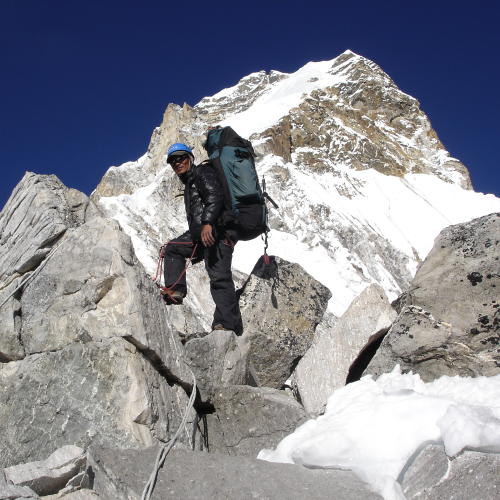
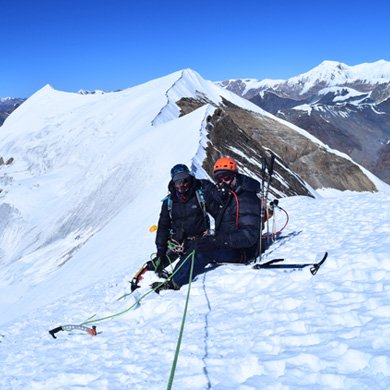
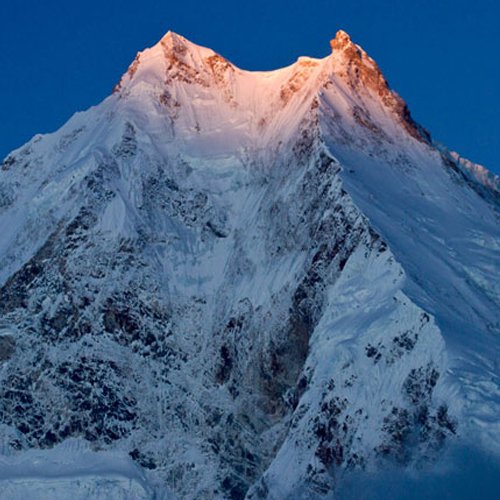
Himalayan Legend Edmund Hillary and Tenzing Norgay started a history of climbing Mt.Everest. Since that more than 2000 climber has successfully ascent to date. We as an expedition company with our previous experiences, we always say safety first than success. The climber should physically and mentally prepare before going for an expedition. Also, we request to climb some other high altitude mountain expedition in Nepalese Himalaya. Mera Peak (6,476m), Amadablam (6,800m), Island Peak (6200m) or any one of expedition above 8,000m like Mt.Manaslu helps to raise the confidence level and technical ideas. Such an expedition helps to familiarize with using climbing equipment and devices. It is one of the most important things that every climber should know to achieve in Himalayan Adventure.

Only the technically fit and mentally prepare person can handle any emergency situation easily. Proper trekking and climbing gears play a vital role to get success. This is one of the most important parts of the expedition. So all the things should be carefully manage to achieve such a great life goal

Highlights

  • Conquer the World's highest peak, Mount Everest, standing at the elevation of 8848m above sea level.
  • Behold the panoramic views of world’s highest peaks, including Mt. Everest, Lhotse, Mt. Maklau, Mt. Cho Oyu, Nuptse, Pumori and many others.
  • Witness the world’s biggest glacier (Khumbu glacier) and longest glacier Ngozumpa Glacier
  • Explore the ancient  and the largest Gompa in Khumbu region, Tengboche Monastery
  • Reach the outstanding viewpoint - Kalapatthar (5545m) for an incredible sunrise and sunset view.
  • Traverse through varied landscapes from lush forests to alpine terrain.
  • Explore the rich biodiversity within Sagarmatha National Park with a chance to spot colorful pheasants, snow leopards and Himalayan Thar.
  • Photographic opportunities in almost entire journey.
  • Immerse yourself in the authentic Sherpa Culture, tradition and lifestyles and taste local cuisine
  • Explore the ancient monasteries, prayer wheels, colorful flags, Mani stones, suspension bridges, rivers, waterfalls and more.
  • Experience the scenic adventurous flight to Lukla Airport, the world's dangerous airport.
  • Unique combination of Glaciers, Sherpa Cultural insights and panoramic views of highest peak.
  • Trace the classic climbing route (legendary Hillary and Tenzing footsteps) on the world’s highest summit
  • Experience one of the 6th toughest mountaineering in the world. 


Itinerary

  • Day 01: Arrival in Kathmandu & Transfer to Hotel
  • Day 02: Trip preparation at KTM
  • Day 04: Fly to Lukla (2,800m) and Trek to Phakding (2,600m)
  • Day 05: Trek from Phakding to Namche Bazar 5-6 hr
  • Day 06: Rest and leisure day at Namche Bazzar, hike to Syangboche
  • Day 07: Trek from NamcheBazzar to Tengboche 5-6 hr
  • Day 08: Trek from Tengboche to Dingboche 5-6 hr
  • Day 09: Acclimatization day at Dingboche
  • Day 10: Trek from Dingboche to Lobuche
  • Day 11: Trek from Lobuche to Gorakshep 3 hrs
  • Day 12: Trek from Gorakshep to Everest Base Camp
  • Day 13-15: Rest, Puja Ceremony by Sherpa & Mountaineering Training
  • Day 16-18: Climb Lobuche East (6119m) - 1st Acclimatization Rotation
  • Day 19: Trek to Everest Base Camp (5364m) 6-7hrs
  • Day 20-22: Rest Training and Preparation
  • Day 23-27: 2nd Acclimatization Rotation
  • Day 28-33: Rest days before summit push
  • Day 34-38: Climb Mount Everest summit and Back to Camp II
  • Day 39: Descend back to Everest Base Camp 5-6 hrs
  • Day 40: Trek to Lobuche via Gorakshep 6-7 hrs
  • Day 41: Trek from Lobuche to Tengboche (3860m) 8hrs
  • Day 42: Descend from Tengboche to Namche Bazaar(3440m) 4hrs
  • Day 43: Trek from Namche Bazaar to Lukla (2850m) 6-7hrs
  • Day 44: Fly from Lukla to Kathmandu, Sightseeing & Farewell dinner
  • Day 45: Final Departure

A warm welcome to mountainous country, Nepal. Our representative will be standby to greet you upon your arrival at the Tribhuvan International Airport to welcome and assist you to transfer to your hotel. After your refreshment time in hotel, we will meet again in the evening for a welcome dinner during which you can savor authentic Nepali cuisine and get a taste of the adventure that lies ahead.  Additionally, Our team will brief you about the upcoming trips and overnight at the hotel.

    As 'Climbing Permit' is required to climb Mount Everest, today's day is allocated inorder to receive the permit. Our trekking leaders will meet you in the hotel and check your trekking and climbing equipment and their conditions. As per the requirements our leader will suggest you to buy or rent the necessary kits from the trekking shops in Thamel. You can spend your time visiting various UNESCO world heritage sites including Swayambhunath, Pashupatinath, Bhaktapur Durbar Square, Bouddhanath. Stay overnight in Kathmandu.

      In the early morning, You'll be transferred to the domestic airport. Embark your day with an exhilarating picturesque flight to lukla airport (2,800m), which takes around 40 minutes. After spending few time reaching Lukla, allocating porters for carrying baggages, the trek begins heading towards Phakding, passing through lush forests and  traditional Sherpa villages and farms. Following the trail, crossing the suspension bridges over the Dudh Koshi river, grasp the astonising views of Kusum Kangaru (6,369m). Next One and half hours of moderate walk brings you to Phakding village for the overnight stop and enjoy the warm hospitality of Everest region.

        Today’s trial winds you through pine forest, beautiful villages and several suspension bridges adorned with prayer flags. About 2 hours of walk takes you the Monjo Village, the entrance gate of the Sagarmatha National Park, where your trekking permit will be checked. 

        After taking lunch, the trial descends along the Dudh Koshi River, passing notable spots like Mislung and Larja Dovan, surrounded by spectacular mountain scenery. Its time to ascend the challenging steepy section of the trek called 'Namche Ukalo' which includes the crossing of iconic Hillary Suspension Bridge. As you will climb higher, you'll get an amazing view of Mt. Everest, Mt. Lhotse, and a closer view of Tawache Peak.

        It's a tough climb up the hill, but you'll be rewarded in Namche Bazaar (popular Sherpa capital) with your first glimpse of Everest and the lively atmosphere of Namche makes your trip worthwhile.

          Continous trekking without taking rest can cause altitude sickness to many. So to avoid that risk as well as allowing our bodies to fully recovered and become ready to acclimatize to the lofty mountain,  we will be taking a much needed break! Although the day will be spent at Namche, it will be full of exploring Namche Bazzar, a shopping hub filled with all sorts of trekking and mountaineering clothing and equipments. Dont miss to out check the Sherpa Culture Museum for an overview of the Sherpa traditions and history of Sherpa climbers in Everest region. 

          There's an optional 2 hours hike to Syangboche (Everest View Hotel), an uphill walk that will help accelerate acclimatization, where you’ll be serverd to magnificient panoramic views of Everest, Lhotse, Ama Dablam and many others snow capped peaks.

            Today's trek kicks off with the early morning breakfast. As the trial progress through Sagarmatha National Park, visiting the monastery located within, accompanied by many other small yet glorifying mountains, we descends along the Dhud Koshi riverside and ascends through the forested path of blue pines, rhododendrons silver fir, blue pines, birch trees to reach Punki Thenga Village, a small settlement with a couple of teahouses. 

            If you are fortunate enough, you might witness the endangered Himalayan flora and fauna, such as musk deer, pheasants, and Himalayan Thar. Don't miss out the  awe-aspiring view of the towering majestic peak - Mt. Everest, Lhotse, Ama Dablam, Kwangde, Thamserku and many other peaks all around you.
            After crossing a bit of difficult path of this route, Imja Khola, you will finally reach the spiritual hub of the Khumbu region, Tengboche. Being here, explore the spiritual surroundings and visit the well-known monastery, Tengboche Monastery.

              The trial continues with the moderate walk into a rich forest followed by chortens, colourful prayer flags, mani walls and many small villages. Our trek route passes through beautiful Debuche and crosses the Imja River to reach Pangboche village, the biggest settlements of Sherpas in the region.  You can witness the spectacular views of the Mt. Island peak throughout the trail. 

              We continue our journey entering the Imja valley following the Lobuche river,and then we ascend steeply to the Dingboche village, a beautiful patchwork of fields enclosed by stone walls, where we will stay overnight. Enjoy a great chance to observe a typical Sherpa village and have lunch with the locals!.

                Today is another day at Dingboche set aside for acclimatization. Climbing Nangkar tshang Peak (5,083 m), also called Nagarjuna Hill Top viewpoint, should help our body adjust to the high altitude. The hike to the viewpoint takes around 3 hours to climb uphill and 2 hours to climb downhill. You can see one of the best views of Makalu, Lhotse, Lhotse Shar, and Island Peak from the viewpoint. Being in Dingboche, immerse yourself into local Sherpa Culture, taste the unique cuisines and explore the local monasteries and stone-walled fields. Relax and enjoy the peaceful environment to prepare for more challenging trek ahead.

                  As we are already in high altitude above 4600m , the trail keeps getting a bit of rough and steeple. Trek begins with a short uphill climb and then, we gradually ascend towards Thukla (4620m) where we take lunch and rest for a while. About one hour of hard climb, we reach Everest Memorial, a site with  prayers flags and memorial monuments everywhere to honor all the mountaineers who lost their life while attempting to climb Mt. Everest. From here, we can see the astonishing view of Ama Dabalam, Cholatse and Taweche. Passing  through the moraines of Khumbu Glacier we trail will get to the Lobuche village where we spent the night.

                    We will have a relatively shorter trek today. After a pleasant breakfast, the trail starts to ascend through glacial moraines. As we go higher up, the oxygen level keeps decreasing. The thinner air makes our short trip a bit challenging. Following the route passing across several steep moraines and the trail move past Changri Nup and Changri Shar Glacier to finally get to the Gorakshep. It is the final settlement in the Everest region and the starting point of the adventurous journey towards the summit. Stay overnight in Gorakhshep.

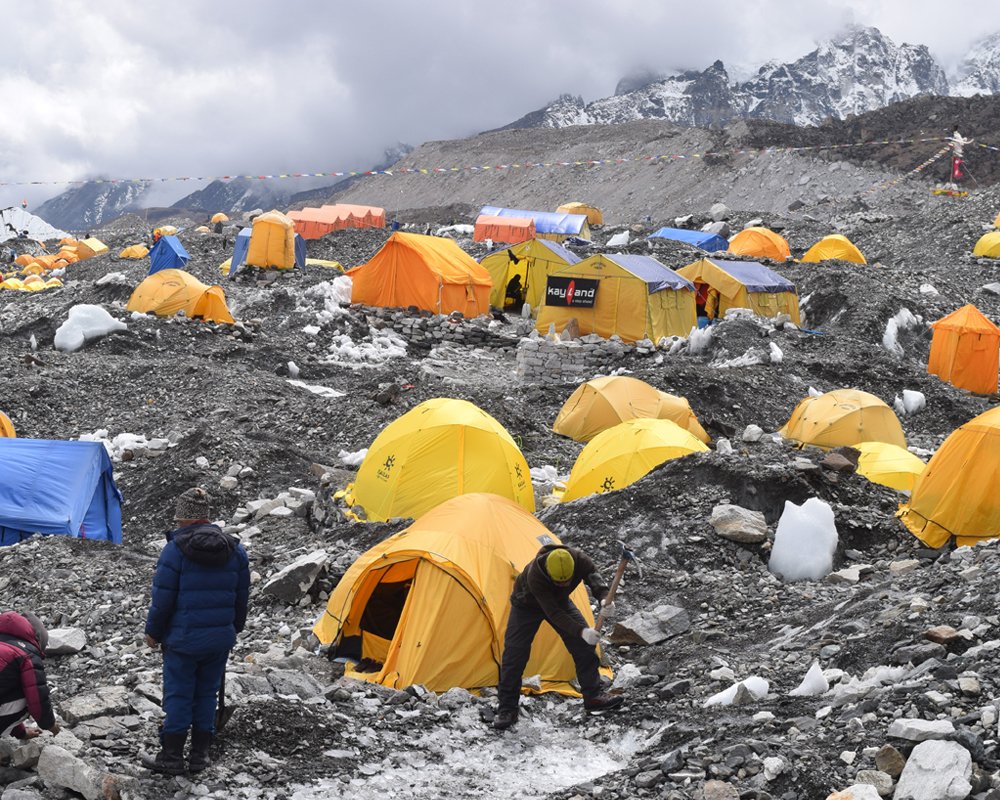
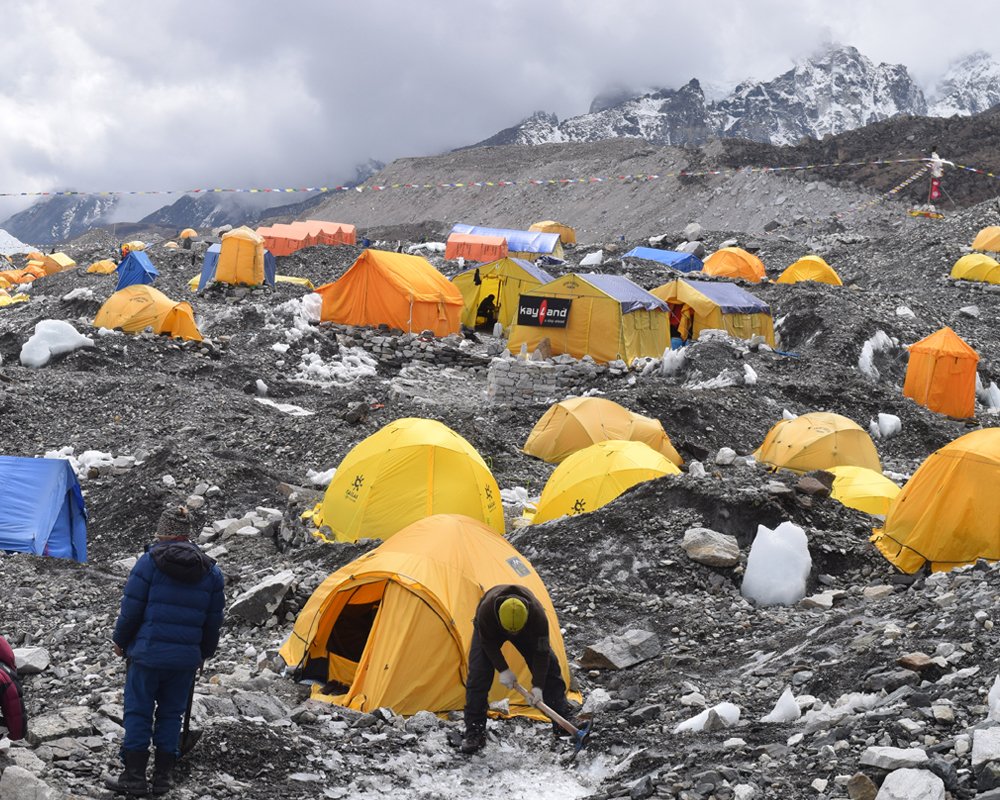
                      After a peaceful and pleasant stay in Gorakhshep, we wil have another short hike to Everest Base Camp today. The trail begins going through sandy frozen lakebed and hike up towards a ridge. We can spot several monuments of those climbers who lost their lives while attempting the summit. The trail gradually inclines through the rocky terrian adjusting with the thinner air. Traversing about 2-3 hours on the rough rocky moraine, dunes and streams of Khumbu Glacier, we arrive at the base of the mighty Mount Everest. Upon reaching the Everest Base Camp, Climbing crew will set up the camps where we stay overnight. Expedition leaders will make the preparations and plot the schedule for the onwards journey for a successful summit to Mt. Everest. 

                        The days from 13-15 are allocated for puja ceremony, proper acclimatization,and training before embarking our climbing period. 

                        As a part of preparation, our Sherpa crew will conduct a puja ceremony to make contact with divine Mount Everest, and pray for overcoming the hurdle during the Mount Everest expedition. This puja delivers the blessings, peacefulness and the confidence to face the forthcoming challenges. 

                        Our Expedition crew will set up all the arrangements and conduct training session and demonstrate on how to optimally utilize the climbing kits such as crampons, ice axe, ascender, radios, harness, oxygen cylinders  etc. Additionally we will learn and practise the appropriate way of climbing across the rope (as a group) while climbing up and down. 

                        As to regain our energy, we stay hydrated, consume nutritious food and take sufficient rest to recover. Be stressfree having fun, and get fully relaxed and prepared for the journey ahead.

                        Overnight stay in tented camp at Base Camp.

                          From today onwards, our climbing period for Mount Everest Expedition starts off. These 3 days period has been alloted to scale a new height as well as to tackle the snowy slope of the Lobuche East peak. Undertaking this summit purely focuses on enhancing the climbing skills practically as we have to pass through icy rotue. This initial rotation phase helps to boost the confidence for further journey towards summit.

                          As per the 1st rotational process, the days are allocated this way which are mentioned below:

                          Day 16- On this day, we initially descend to Gorakshep (2.5hrs), take lunch and move down further to reach Lobuche (4910m) consuming another 3 hours. Overnight stay at Lobuche.

                          Day 17– On this day, we traverse across the Lobuche Glacier and climb steeply through rocky moraine to reach High Camp campsite gaining the substaintial height at 5,600m. Upon reaching the site, the climbing guide will set the camp, have lunch and relax. Overnight stay in High Camp.

                          Day 18– Its a Lobuche summit day today. We leave the camp at the wee time around 2-4 Am and ascends on the steep slope about 2-3 hours to reach Crampon point. With the use of crampons and ascenders,the trails progress through several steep snowy portions (45-60 degree elevation) following the fixed ropes. Pushing upwards through the technical challenging trail for about another 3 hours, we reach Lobuche Peak. Enjoy the glorious moments along with amazing views of Everest, Lhotse, Ama Dablam, Nuptse, Cholatse, Island peaks and many others. Descend back to Lobuche Base Camp for overnight stay.

                            After a successful summit to Lobuche Peak, we again traverse moraine fo Changri Nup and Changri Shar Glacier leading to Gorakshep where stop for lunch. We resume our trip passing through the rough rocky moraine, dunes and streams of Khumbu Glacier which takes us to our destination spot, the Everest Base Camp. Overnight stay in tented camp at Base Camp.

                              Before starting the 2nd rotation these days are set aside for proper acclimatization and preparation. As to regain our energy, we stay hydrated, consume nutritious food and take sufficient rest to recover. Be stressfree having fun, and get fully relaxed and prepared for the journey ahead.

                              During these three days, our Sherpa crew will set up all the arrangements and guide us the way of overcoming every kinds of obstacles thoroughly. This kind of training session boosts the confidence of climbers and assist them to get mentally and physically ready for summit attempt. 

                              We will spend all three days at Base Camp.

                                As a part of our climbing period for Mount Everest, these 5 days period has been alloted to scale to new heights and acclimatize in between. During this stage the trail moves between Camp-1, Camp-II, Camp-III and back to Base Camp. 

                                As per the 2nd rotational process, the days are allocated this way which are mentioned below:

                                Day 23– Climb from Base Camp to Camp I (6065 m) 4-6 hrs

                                This section of the trail is highly technical as we have to traverse through Khumbu Icefall which is a steep glacier containing large crevasses and deceptive ice seracs. With high attention we climb through fixed ladders and ropes. Once we get on top of Khumbu Icefall, our Sherpa crew will set up for overnight stay.

                                Day 24– Climb from Camp I to Camp II (6400 m) 2-3hrs

                                Today, we will be scaling the height of Camp-II. It is considered as the vital acclimatization camp for any Mount Everest expedition, which lies beneath the huge Lhotse wall. The trail today is relatively quite shorter and easier compared to that of Camp I. With the use of climbing gears we climb up gradually for 2-3 hours we reach the Camp II campsite. Climbing leaders will set up the camps in a organized way as we require appropriate acclimatization, nutritious intakes and peaceful environment.

                                Day 25– Rest at Camp II

                                This day is set aside for proper acclimatization and preparation. As to regain our energy, we stay hydrated, consume nutritious food and take sufficient rest to recover. We will dedicate our time on sharping our climbing skills for the curcial climb ahead.  Be stressfree having fun, and get fully relaxed and prepared for the journey ahead.

                                Day 26– Climb to Camp III (7200m) back to Camp II (6hrs)

                                We will be scaling Camp III today. This section is yet another technically challenging trail with long tiring climb. The climb onwards leads us to the Geneva Spur towards the east.The glacier is crossed through the right side, with a 600m steep climb on a snowy route having 60-65 degree inclination. While walking at this high altitude, oxygen level drops significantly and if there comes any discomforts, get oxygen supplement immediately. Moving past this section we reach on as small ledge beneath the Lhotse, which adjoins Mt. Lhotse. This ledge is the campsite where the Camp III will be set. After scaling the altitude of Camp-III, the trail descends back to Camp-II for an overnight stay.

                                Day 27– Trek from Camp-II to Base Camp, 5-6 hrs

                                Today is the last day of 2nd rotation phase. Retracing the same route and overcoming the icy glacial route, we descend to Base Camp. As of now, we are well aware of the challenges that comes before the Summit attempt. We take enough rest, acclimatize effectively and get fully prepared for the summit push. Overnight stay at Base Camp.

                                  These six days are allocated for proper rest and acclimatization. It is better to stay at lower altitude areas for better oxygen and quickly regaining strength. Climbers opt to descend to Syangboche, Pangboche or Namche Bazaar for the fast recovery process. During this period, Expedition crews keep on monitoring the climatic conditions and determine the suitable time before calling for the summit attempt.

                                    Now, we are fully ready, prepared and acclimatized for Everest Summit. The climbing perioid may varies depending upon the weather condition and fitness level of each climber. The mentioned 6 day period remain unchanges if the trail goes as expected.

                                    Therefore, our Mount Everest expedition schedule will no longer be precise and will be decided as we go day by day or hour by hour. Our lead climbing guide will make the needed decision in situ. Each climber will be paired with one Sherpa guide for enhanced safety while reaching the Mount Everest Summit.

                                    Although not fixed, the planned day-by-day activity for our Mt. Everest climbing will be as follows-

                                    Day 34– Climb from Base Camp to Camp II, 5-6 hrs
                                    Day 35– Rest at Camp II
                                    Day 36– Climb from Camp II to Camp III with oxygen
                                    Day 37– Climb from Camp III to Camp IV (7920 m), 6 to 7 hours

                                    On day 37, we are marshing towards Death Zone area known as South Col. The trail moves though Yellow Band section in which Yellow Band is composed of limestone, marble and phyllite. Moving past yellow band section, the trail passes through Geneva Spur which is like a black rock having anvil shape.

                                    Traversing through these sections require the skills on both rock climbing and ascending on fixed ropes. After overcoming these section we reach on a flat ground covered with loose rocks, accompanied by cold strong wind. Our Sherpa Crew will set up the camp (Camp-IV) on this flat ground for the overnight stay.

                                    Day 38Mt. Everest Summit push & back to Camp II,(9-13 hrs)

                                    The most awaited trip has finally arrived. We will be heading towards the Everest peak navigating through narrow Southeast ridge which is the best way to make the summit attempt. Before conquering the peak, we have to traverse past the Balcony, South Summit (8690 m), Cornice Traverse, and Hillary Step, which are explained below.

                                    Climb from Camp IV to Balcony (8400 m) 5-6 hrs

                                    From Camp IV onwards, we use the supplemental oxygen to reduce the loss of endurance. The journey progresses marshing steeply up along the ropes to the Triangular Face.  The progress will be slow, and snow will cause frequent pauses. Be watchful to rockfalls and wear helmets for the safety. Due to traffic as of long queue the trail climb up slowly followed by frequent pauses.

                                    Climb from Balcony to South Summit (8690m) 4-5 hrs

                                    We continue our journey climbing steeply on the narrow rocky trail. Before arriving the South Summit, the trail get physically and technically challenging as we have to ascend with the rising inclinations.

                                    Climb from South Summit to Cornice Traverse and Hillary Step (8790m) 1 hr

                                    As the trail progress we pass through exposed section which is the open from both sides. For the safety, this part is board with the ropes. After moving past the Cornice Traverse, the trail climb up steeply on a straight rock, which is 12 meter tall. We climb up wisely speeding our pace to avoid overcrowding in this section which may results in collapsion due to overweight.

                                    Climb from Hillary Step to Everest Summit (8848m) 1 -2 hrs

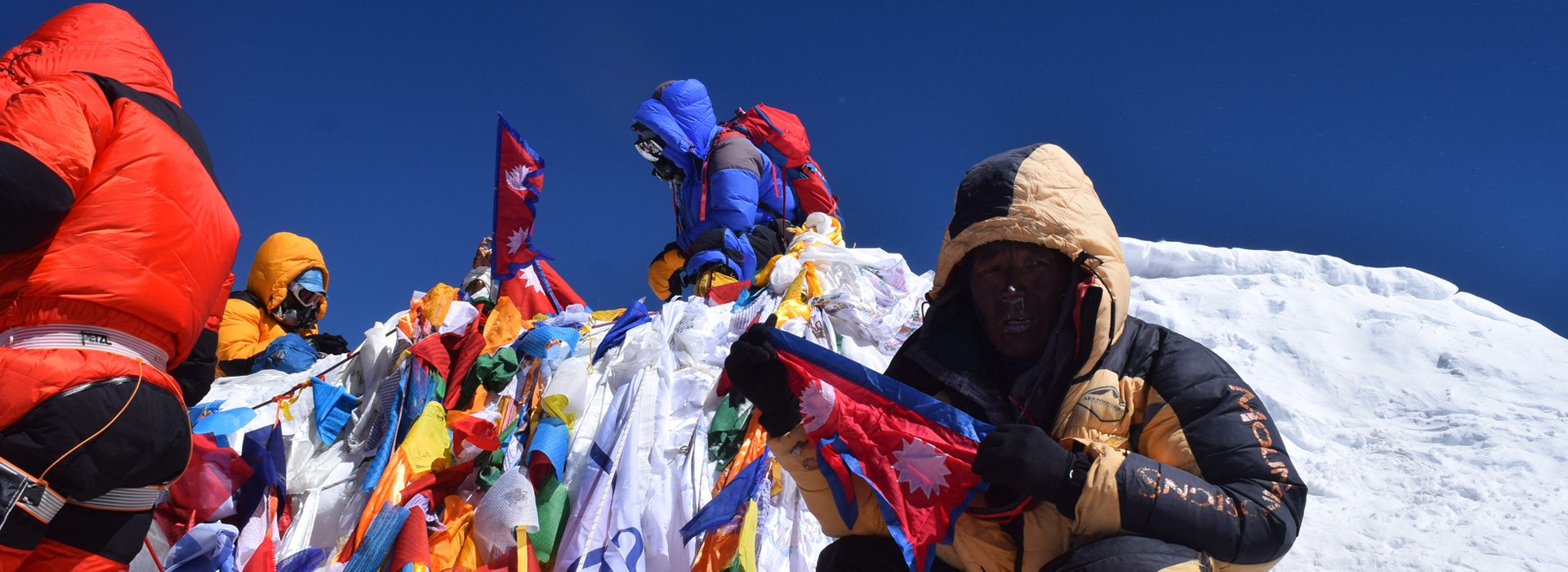
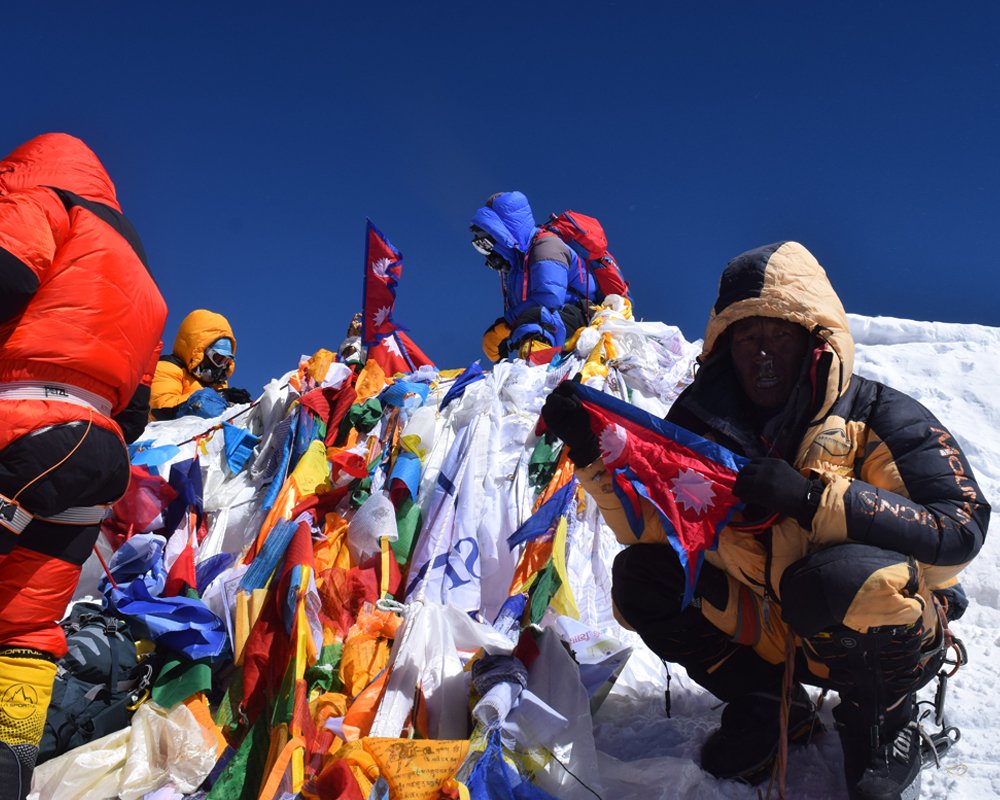
                                    The tail moves ahead gradually following the snowy slope. Passing across several fasle summit, we finally reach at the highest altitude of the world, the Mount Everest peak. Raise your flag and celebrate your glorious moment. Caputre your proud moments with cameras for the memory of life time. Enjoy the amazing view from the top of the world. 

                                    Descend to Camp IV, 4 to 7 hours

                                    After a joyful time at the Mount Everest summit, we descend retracing our journey back to Camp IV. Be catious while climbing down from Hillary Step, the Cornice Traverse, and South Summit.

                                    Descend to Camp II, 3 hrs

                                    After a short rest, we resume our trail descending to Camp III and then continue to climb down to Camp II enjoying the fresh air with high oxygen level. Overnight stay in tented camp at Camp-II.

                                      On this day, we dispose the waste and clean up camp-II properly. Retracing the same route and overcoming the icy glacial route, we descend to Base Camp. Reaching Base Camp indicates the end of our climbing period. Overnight stay at Base Camp.

                                        We cleanup the camp and pack up our belongings in the morning. After taking pleasant breakfast, we head towards Lobhuche. Retracing the trail through rocky moraine followed by streams, we reach Gorakhsep in couple of hours. 

                                        After a  break for lunch in Gorakhshep, we resumes our trail passes across Changri Nup and Changri Shar Glacier, and descend through glacial moraine to leading to Lobuche where we stop for the night today. 

                                          Its a long trekking trip today. With the stunning view of Ama Dabalam, Cholatse and Taweche, we start our early morning trip traversing through Khumbu glacier, move past memorial monuments, trek sharply downhill before arriving Thukla. After a gradual descend we take another short and sharp downhill trek to reach Dingboche where we stop for lunch. 

                                          After enjoying the lunch, the trail descends towards Imja valley, move past Pangboche village, and cross Imja Khola to reach Debuche. Following the forested path accompained by chortens, colourful prayer flags, mani walls and many small settlements we get to Tengboche. 

                                          Overnight stay at Tengboche.

                                            Its an another retracing journey today. After a warm delicious breakfast, the trail starts with initail crossing of bride over Imja Khola and descends towards Punki Thenga where we take a shor break. The trai moves forward following the forested path and ascend slightly up in the final section to reach our destination spot for today, Namche Bazaar. 

                                            Overnight at Namche Bazaar.

                                              It is our retracing trip today which continues after taking deep dive from the Namche hill for about an hour then descend gradually through dense forests crossing several suspension bridges all the way to Manjo, Benkar, Phakding and ultimately to Lukla. 

                                                Today we shall leave for Kathmandu. The flight to Kathmandu is generally scheduled in the morning to avoid the disturbances caused by afternoon wind in Lukla. Trekkers should be prepared for the delay or cancellation of flights due to the bad weather which is beyond our control. After a 40 min scenic flight to TIA, you will transferred to a hotel. Take proper rest and later in the day you may go for some afternoon shopping and buy some souvenirs for your near and dear ones. You may also wander around in the streets of Thamel. Pack your bags for your return flight to the onward destination. In the evening, we will have a farewell dinner in a typical Nepalese Restaurant with cultural shows.  

                                                  An adventurous, exciting, and entertaining trail, Mount Everest Expedition, comes to an end today. Extend your stay and enjoy other packages if you have enough time for staying in Nepal. You shall be transferred to the airport for your flight to your onward destination by a representative of Southcol Adventures. We thank you for being a part of our team and we hope that you have created some of the best memories of your life during this trek. Have a safe and happy journey ahead!

                                                    Cost Details

                                                    Included

                                                    • All necessaries ground transportation including Sightseeing, hotel and airport

                                                    Kathmandu Hotel:

                                                    • 5 night Kathmandu hotel accommodation in 5* hotel with Breakfast

                                                    Permits:

                                                    • Mt.Everest Climbing Royalty
                                                    • National Park entry permit and local permits
                                                    • Government Liaison Officer (L.O)
                                                    • Garbage Management
                                                    • WalkiTalki Set Permits and Satellite phone Permits

                                                    Domestic Flights:

                                                    • Domestic flights (Kathmandu-Lukla-Kathmandu) as per itinerary

                                                    Cargo:

                                                    • 50 Kg bag packs are included upto Base Camp

                                                    Climbing guide: 

                                                    • Climbing Guide, Everest summiteer

                                                    Porters:

                                                    • Porters up to base camp to carry your personal stuffs during the trekking
                                                    • Three time meals a day during trekking period with tea coffee and hot waters

                                                    Base Camp Services:

                                                    • Base Camp management tent for sleeping purpose and store
                                                    • Dinning tent with heating system
                                                    • Hot shower and toilet
                                                    • Solar, and Generator for charging devices
                                                    • Three course of meal each day
                                                    • Fresh fruits, soups and hot drinks item 24 hr

                                                    Above the Base Camp:

                                                    all necessary setellment C1, C2, C3, C4

                                                    Climbing Equipment:

                                                    • Group climbing equipment including ladder, rope, tent, shovel etc.
                                                    • WalkiTalki set, Garmin and Satelite Phone
                                                    • Kitchen Equipment for C1, C2, C3 and C4

                                                    Oxygen set:

                                                    • 6 bottle of summit oxygen
                                                    • Mask and regulator
                                                    • One extra set of oxygen with an extra cylinder for emergency use.

                                                    Sherpa and Staffs:

                                                    • Base Camp Staffs for kitchen, base camp manager
                                                    • High camp staffs including kitchen and porters
                                                    • Insurance and daily wages and equipment for all field staffs.

                                                    Excluded

                                                    • Visa: Nepal visa fees
                                                    • KTM Hotel: Extra days stay in KTM with meal
                                                    • Your personal medical/rescue insurance
                                                    • helicopter evacuation if any emergency case.
                                                    • Beverage: Cola, beer, bar bill
                                                    • Oxygen & Equipment: Extra use of oxygen cylinder more
                                                    • guide: Extra Guide if needed
                                                    • Tips: tips your climbing crew
                                                    • Summit Bouns:....$

                                                    FAQs

                                                    • Q1. Where is Mount Everest?

                                                      Mount Everest is situated in Mahalangur Himal range, on the border of Nepal and Tibet. The southern part of Mount Everest (the classic climbing route to Mount Everest) lies in Solukhumbu district of Bagmati Province of Nepal whereas the portion of Northern part lies in the Tingri of Tibet. 

                                                    • Mount Everest is the highest point in the Earth with an elevation of 8,848.86 meters (29,031.7 feet) above sea level. 

                                                    • The permits that are required to climb Mount Everest are as follows:

                                                      1. Sagarmatha National Park Entry Permit
                                                      2. TIMS (Trekkers' Information Management System): 
                                                      3. Khumbu Pasang Lhamu Rural Municipality Permit
                                                      4. Mount Everst Climbing Permit

                                                      While travelling with South Col Adventures, all these required permits will be taken care of and arranged by our company itself.

                                                    • Prime climbing seasons including  pre-monsoon (March to May) and post-monsoon (September to November) offer the most favorable time for the Mount Everest expedition. We highly recommend post-monsoon season for Mount Everest expedition as the fact of suitable weather conditions with the drop in temparature, clear skies and safer climb.

                                                    • Climbing Mount Everest poses various dangers due to freezing temperatures, high altitude, and wild storms. The risks faced by climbers include avalanches, falling rocks/ice, danger when crossing the Khumbu Icefall, hypothermia, falls, severe fatigue, and illness from low oxygen levels.

                                                      Altitude sickness is a significant concern due to low oxygen availability at high altitudes, leading to conditions like acute mountain sickness, high-altitude pulmonary edema, and high-altitude cerebral edema. Oxygen deprivation above 8,000m can impair cognitive function and lead to brain cell damage. Climbers also face challenges like overcrowding, substandard mountaineering management, climate change impacting glacier stability, and the dangers of slippery ice and subzero temperatures.

                                                      Despite these risks, advancements in climbing gear and communication technology have increased the success rate of climbers from 18% to 56% over the past decades. Cell service availability allows for two-way communication, enhancing safety during climbs. However, overcrowding remains a significant issue on Everest expeditions, affecting climbers' safety and causing fatigue and disorientation among climbers.

                                                      In conclusion, while climbing Mount Everest has become safer with improved gear and communication options, climbers still need to prioritize physical training, equipment preparation, and weather awareness to mitigate the inherent dangers of this challenging ascent.

                                                    • Most climbers use supplemental oxygen above the "death zone" (above 8,000m) to enhance their chances of summiting and mitigating the effects of altitude. However, a few experienced climbers attempt the climb without supplemental oxygen.

                                                    • The success rate of climbing Mt. Everest can vary from year to year. The average summit success rates have increased significantly to 60 -65% in the last 3 decades compared to 30-35% to those of 1990. The summit success depends on factors such as weather conditions, individual fitness, acclimatization, and team dynamics.

                                                      The overall mortality rate of climbers on Mount Everest is between1%1-2%.

                                                    • Mount Everest was first climbed by Sir Edmund Hillary (New Zealand) and Tenzing Norgay Sherpa (Nepal) on May 29, 1953.


                                                    • The two primary routes to summit Mout Everest are the South Col Route (via Nepal) and the North Col Route (via China). Out of them, the South Col Route is the iconic and challenging mountaineering adventure, offering most secured path with extensive rescue infrastructures and well-experienced local staffs. 

                                                    • Climbing Mount Everest is a serious undertaking which requires physical, technical and mental preparation. 

                                                      In terms of mountaineering experience point of view, you need to be an advance climber with the prior high-altitude climbing experience above 7000m or 8000m (like Cho-oye, Manaslu). Climbers need to be comfortable and proficient with the use fo climbing gears including crampons on snowy and icy surface, fixed rope to climb on steep and exposed sections. 

                                                      Regarding the physical finess, you need to be have high fitness level based on endurance, core and strength. This includes aerobic exercises such as hours of cycling, long distance running (20-25km) for 3-4 days a week, hiking in elevation gaining about 1500m with a 10kg bag. 

                                                      In terms of mental preparation, you need to be psychologically and emotionally prepared to face a multitude of challenges. As you have to step out of the comfort zone, you need to be humble, patient under pressure situations, manage and regulate stress levels effectively, open to receiving and deferring to guidance, and able to work within a team environment. As to spend about 2 months in the mountains and to cope with the challenges, such as high altitude sickness, tough weather conditions and fatigue during the summit attempt it requires mental toughness, strong determination and extreme desire of climbing mountain.


                                                    • Everest Expedition is ranked as the 6th toughest climbs in the world. The alpine grading for Everest Climbing is 4E which means the climb is streneous and technically demanding as the climber has to traverse through steep snowy and icy slopes, exposed ridges and crevasse sections demanding a high degree of fitness and prior high altitude mountaineering experience above 7000m.

                                                      Summiting Everest is extremely challenging due to significantly high altitude, harsh and unpredictable weather condition, highly technical climbing sections and overcrowding create hazardous situations. The Khumbu Icefall, Lhotse Face, Western Cwm, Hillary Steps and Summit Ridge are considered the toughest and dangerous part of the climb. This expedition includes the 'Death Zone' section having altitudes above 8,000 meters where oxygen levels are insufficient to survive human life causing severe fatigue, hypoxia, and impaired decision-making, brain damage which can be fatal.

                                                    • As per the Everest Expedition from Nepal Side (South Col), we will have 4 high altitude camps before the summiting Mount Everest.

                                                      1. Camp I (6,065m)
                                                      2. Camp II (6400m)
                                                      3. Camp III (7200m - 7500m)
                                                      4. South Col or Camp IV (7906m)
                                                    • The Khumbu Icefall, Lhotse Face, Western Cwm, Hillary Steps and Summit Ridge are considered the toughest and riskiest part of the climb. This expedition includes the 'Death Zone' section having altitudes above 8,000 meters where oxygen levels are insufficient to survive human life causing severe fatigue, hypoxia, and impaired decision-making, brain damage which can be fatal.

                                                    • The most common factors resulting fatalities are acute mountain sickness, avalanches, storms and unpredictible weather changes, rockfalls, crevasses, falls, frostbite, fatigue. The high altitude  above 8000m is a death zone area where the oxygen level is significantly low and lack of oxygen leads to cardiac arrests, frosbite, and eventual death. 

                                                    • The alpine grading for Everest Climbing is 4E which means the climb is streneous and technically demanding as the climber has to traverse through steep snowy and icy slopes, exposed ridges and crevasse sections demanding a high degree of fitness and prior high altitude mountaineering experience above 7000m. Thus, this expedition is not for the beginners and recommended to advanced high-altitude climbers.

                                                    • During Everest Expedition, the section that lies between Everest Camp IV and Everest summit is known as Death Zone because this area (South Col) resides at the altitudes above 8,000 metres  where oxygen is dangerously low. From here, the oxygen level drops significantly making climbers risking serious brain damage which can be fatal.

                                                    • The South Col Adventures is one to the mostly reputed trekking companies with impressive record of successful Everest Expedition. We provide experienced and reliable porters and proficient guides. Moreover, our company aims on safety, quality and professional service by providing fine equipment and logistics. In conclusion, our Everest Expedition is known for high safety standards, high success rate, carefully designed itineraries, high-quality camping, reliable logistics within the most affordable prices.

                                                    You May Also Like

                                                    Explore more