About Everest Three passes Trek
Everest Three Passes Trek is one of the most complete and challenging trekking adventures in Nepal, taking you deep into the Everest region and the remote valleys of the Khumbu Himalayas. Unlike the classic Everest Base Camp Trek, this high-altitude circuit crosses the three spectacular mountain passes—Renjo La (5,360 m), Cho La (5,420 m), and Kongma La (5,535 m)—while also exploring Gokyo Lakes, Gokyo Ri, Everest Base Camp and Kala Patthar (5,545 m). The route combines dramatic mountain scenery, glaciers, high-altitude passes, traditional Sherpa villages and authentic Himalayan culture into one extraordinary journey.
The Everest Three Passes Trek in Nepal is designed for trekkers who want to go beyond the standard Everest Base Camp route. Starting with a scenic flight to Lukla, the journey follows the Dudh Koshi Valley to Namche Bazaar before turning toward the quieter Thame and Lungden valleys. From there, the trail crosses Renjo La into the beautiful Gokyo Valley, continues over Cho La toward Lobuche and Everest Base Camp, and finally crosses Kongma La into the Chhukung Valley. This circular route offers a much broader experience of the Everest region than the traditional out-and-back EBC trek.
With South Col Adventures, the Everest Three Passes Trek combines careful acclimatization, experienced local guides, organized trekking logistics and a thoughtfully designed route. The itinerary includes acclimatization in Namche Bazaar, exploration of the Gokyo Valley and Gokyo Ri, crossings of all three high passes, a visit to Everest Base Camp (5,364 m) and an early-morning ascent of Kala Patthar (5,545 m) before descending through Chhukung, Tengboche, Namche Bazaar and Lukla.
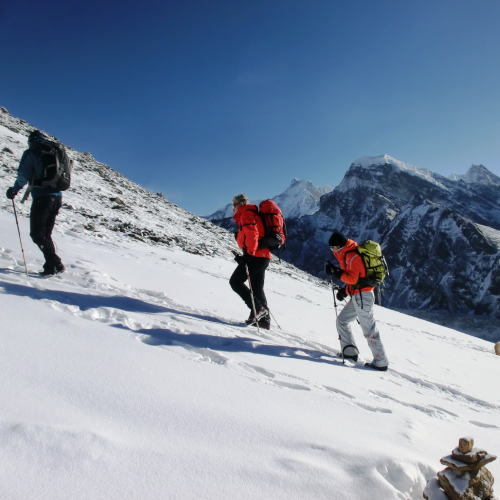
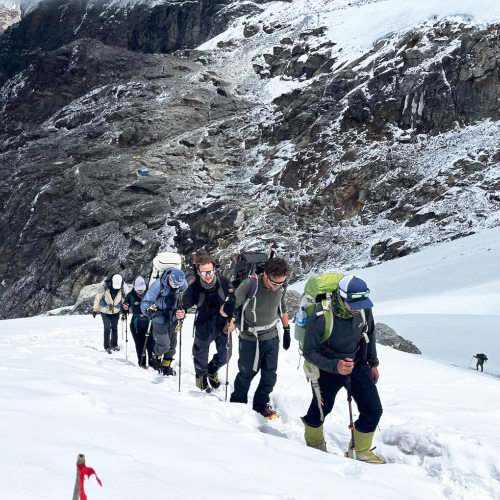
Although the Everest Three Passes Trek does not require technical mountaineering skills, it is considerably more demanding than the standard Everest Base Camp Trek. Long trekking days, steep ascents and descents, glacial terrain, high elevations, cold temperatures and potentially snowy conditions at the passes make proper preparation essential. The crossings of Renjo La, Cho La and Kongma La can be particularly challenging depending on weather and trail conditions, so previous high-altitude trekking experience, good fitness and a flexible approach are strongly recommended.
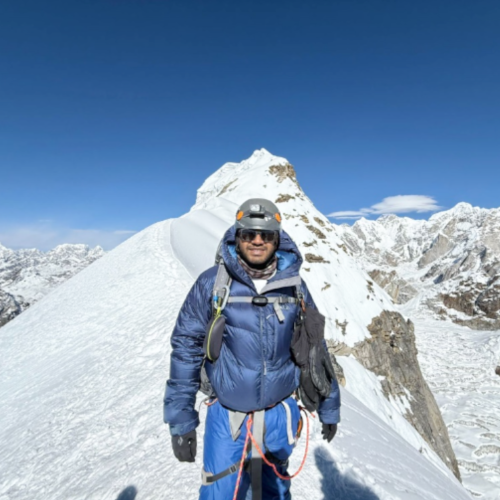
For adventurous trekkers looking for an even greater challenge, the Everest Three Passes Trek can be combined with Lobuche East Peak (6,119 m) or Island Peak (6,189 m). These combinations add genuine Himalayan peak climbing to an already demanding high-altitude circuit and are suitable for travelers with appropriate preparation and climbing goals.
The Three High Passes of Everest
Renjo La Pass – 5,360 m
Renjo La is the first major pass on the circuit when following the South Col Adventures itinerary from Lungden toward Gokyo. The climb becomes increasingly demanding as the trail approaches the pass, but the reward is an impressive panorama of the surrounding Himalayan peaks and the Gokyo Valley. From the pass, trekkers descend toward the turquoise Gokyo Lakes.
Cho La Pass – 5,420 m
Cho La Pass connects the Gokyo Valley with the Everest Base Camp section of the Khumbu. The approach involves rocky and glacial terrain, and snow or ice can make the crossing more challenging depending on conditions. From the top, trekkers can enjoy spectacular views of Everest, Cholatse and surrounding peaks before descending toward Dzongla.
Kongma La Pass – 5,535 m
Kongma La is the highest of the three passes and is regarded as one of the most demanding sections of the trek. The route involves rugged terrain and glacial sections before reaching the pass and descending toward Chhukung. The crossing provides dramatic views of the high Himalayan landscape and completes the three-pass circuit.
Major Attractions of Everest Three Passes Trek
🏔️ Three High Mountain Passes
The trek crosses three legendary Himalayan passes: Renjo La (5,360 m), Cho La (5,420 m), and Kongma La (5,535 m). Each pass offers spectacular mountain scenery and a thrilling high-altitude trekking experience.
🏞️ Gokyo Lakes
Located in the beautiful Gokyo Valley, the Gokyo Lakes are a series of turquoise glacial lakes surrounded by dramatic Himalayan peaks, glaciers, and peaceful alpine landscapes.
🌄 Gokyo Ri
At 5,357 meters, Gokyo Ri is one of the finest viewpoints in the Everest region, offering panoramic views of Everest, Cho Oyu, Makalu, Lhotse, and surrounding peaks.
🏕️ Everest Base Camp
Located at 5,364 meters, Everest Base Camp is one of the major highlights of the trek. The route reaches the base of Mount Everest while passing through the spectacular Khumbu Glacier and Khumbu Icefall.
🌅 Kala Patthar
At 5,545 meters, Kala Patthar provides some of the closest and most spectacular views of Mount Everest, Nuptse, Pumori, and Lhotse. Sunrise from this viewpoint is an unforgettable experience.
🏘️ Namche Bazaar
Namche Bazaar is the vibrant gateway to Everest and an important acclimatization stop. The town offers impressive mountain views, Sherpa culture, local markets, cafés, and traditional Himalayan hospitality.
🛕 Tengboche Monastery
Tengboche Monastery is one of the most important Buddhist monasteries in the Khumbu region. Set against the magnificent backdrop of Ama Dablam, it provides a memorable cultural and spiritual experience.
🏔️ Khumbu Glacier and Icefall
The dramatic Khumbu Glacier and Khumbu Icefall create one of the most spectacular landscapes along the Everest Base Camp section of the trek, surrounded by towering Himalayan peaks.
🏡 Thame and Lungden Valley
The remote Thame and Lungden valleys offer a quieter side of the Everest region, with traditional Sherpa villages, ancient Buddhist culture, and beautiful mountain scenery away from the busier trails.
🏞️ Sagarmatha National Park
Much of the trek passes through Sagarmatha National Park, a UNESCO World Heritage Site known for its spectacular mountains, glaciers, alpine landscapes, and unique Himalayan biodiversity.
🙏 Sherpa Culture and Himalayan Villages
The trek provides opportunities to experience authentic Sherpa culture, Buddhist monasteries, prayer flags, mani walls, traditional villages, and warm Himalayan hospitality throughout the Khumbu region.
Everest Three Passes Trek Route
The Everest Three Passes Trek route follows a spectacular circuit rather than simply retracing the classic EBC trail. After flying from Kathmandu to Lukla, trekkers walk through Phakding to Namche Bazaar, the main Sherpa trading center and an important acclimatization point. The route then heads north through Thame and Lungden toward the remote Renjo La region.
From Lungden, the trail climbs over Renjo La Pass (5,360 m) and descends toward the turquoise Gokyo Lakes. After exploring Gokyo and hiking to Gokyo Ri (5,357 m), the route crosses the challenging Cho La Pass (5,420 m) to reach Dzongla and Lobuche. The journey then joins the classic Everest Base Camp trail, continuing to Everest Base Camp and Kala Patthar. Finally, trekkers cross Kongma La (5,535 m) into Chhukung before descending through Dingboche, Pangboche, Tengboche, Namche Bazaar and Lukla.
Main route:
Kathmandu → Lukla → Phakding → Namche Bazaar → Thame → Lungden → Renjo La → Gokyo → Gokyo Ri → Thagnak → Cho La → Dzongla → Lobuche → Everest Base Camp → Kala Patthar → Kongma La → Chhukung → Tengboche → Namche Bazaar → Lukla → Kathmandu
Everest Three Passes Trek – Extend Your Himalayan Adventure
The Three Passes route can also be combined with Himalayan peak climbing for a more demanding adventure.
Everest Three Passes with Lobuche Peak Climbing – 6,119 m: Combine the three high passes, Gokyo, Everest Base Camp and Kala Patthar with an ascent of Lobuche East, adding glacier travel, fixed ropes and technical climbing.
Everest Three Passes with Island Peak Climbing – 6,189 m: Continue toward Chhukung after crossing Kongma La and add an ascent of Island Peak (Imja Tse). The climb involves glacier travel, fixed ropes and snow and ice climbing.
For trekkers who want a demanding but non-climbing adventure, the standard Everest Three Passes Trek provides a complete high-altitude circuit without requiring a summit attempt.
Everest Three Passes Trek Difficulty
The Everest Three Passes Trek is a challenging to strenuous high-altitude trek and is more demanding than the standard Everest Base Camp Trek. The route includes three passes above 5,300 meters, long trekking days, steep climbs, rocky trails, glacial terrain and potentially snowy or icy sections.
The highest trekking point on the itinerary is Kala Patthar at 5,545 m, followed closely by Kongma La at 5,535 m. Cho La reaches 5,420 m and Renjo La 5,360 m. Because conditions can change quickly at these elevations, trekkers should have good endurance, previous hiking or high-altitude experience and the ability to walk for several consecutive days.
Previous high-altitude trekking experience is strongly recommended, although technical mountaineering experience is not normally required. Depending on snow and ice conditions, microspikes, crampons or other traction equipment may be required during some pass crossings.
Is Everest Three Passes Trek Suitable for Beginners?
The Everest Three Passes Trek is not the ideal choice for first-time trekkers unless they have strong fitness, extensive hiking preparation and appropriate guidance. The route is significantly more demanding than the classic EBC trek because of the three high passes and remote sections.
Trekkers should be comfortable with long uphill and downhill walks, uneven terrain and high-altitude conditions. Anyone choosing this route should prepare carefully and allow sufficient time for acclimatization.
Acclimatization on Everest Three Passes Trek
Acclimatization is essential for the Everest Three Passes Trek because the route reaches elevations above 5,500 meters. South Col Adventures includes an acclimatization day in Namche Bazaar (3,440 m) before the route enters the higher and more remote valleys.
The gradual progression through Thame, Lungden and Gokyo also allows trekkers to gain altitude progressively. Maintaining a slow pace, staying hydrated, eating properly and communicating symptoms with your guide are important parts of safe high-altitude trekking.
Best Time for Everest Three Passes Trek
The best seasons for Everest Three Passes Trek in Nepal are generally spring (March–May) and autumn (September–November). These periods usually provide better mountain visibility and more favorable trekking conditions.
Spring brings improving temperatures and blooming vegetation at lower elevations, while autumn is known for clear skies and crisp Himalayan views. Winter can bring heavy snow and extreme cold, particularly around the three passes, while monsoon conditions can reduce visibility and affect trail conditions.
Because Renjo La, Cho La and Kongma La are weather-sensitive high passes, conditions should always be checked before departure and during the trek. South Col Adventures may adjust the route when weather or trail conditions make a pass unsafe.
Everest Three Passes Trek Preparation and Fitness
Good physical preparation is one of the most important factors for successfully completing the Three Passes Trek. Begin training several weeks or months before departure with a combination of endurance, strength and uphill walking.
Recommended preparation includes:
- Long-distance hiking
- Uphill and stair training
- Cardiovascular exercise
- Leg and core strengthening
- Consecutive-day hiking
- Weekend hikes with a backpack
- Training on uneven terrain
- Gradually increasing walking distance and elevation
The objective is to build enough endurance to remain comfortable during long trekking days at progressively higher elevations. You should also break in your trekking boots before departure and prepare for cold, wind, snow and rapidly changing Himalayan weather.
Everest Three Passes Trek Equipment
Because this is a high-altitude trek with three major pass crossings, appropriate trekking equipment is essential.
Essential equipment includes:
- Waterproof trekking boots
- Trekking poles
- Warm down jacket
- Thermal base layers
- Waterproof jacket and trousers
- Sleeping bag
- Headlamp
- Daypack
- Warm gloves and socks
- Sunglasses or mountain goggles
- Sunscreen and lip balm
- Water bottles or hydration system
- Personal medication
- Gaiters
- Microspikes or crampons when conditions require them
A detailed packing list should be prepared before departure based on the expected season and mountain conditions.
Everest Three Passes Trek Weather and Trail Conditions
Weather in the Everest region can change rapidly, particularly above 5,000 meters. Snowfall, strong winds, freezing temperatures, poor visibility and icy trails can affect the three pass crossings.
Conditions at Renjo La, Cho La and Kongma La may vary considerably between seasons and even from one day to another. South Col Adventures maintains flexibility to modify or adjust the itinerary when required for safety.
Everest Three Passes Trek Cost
The Everest Three Passes Trek cost depends on the duration, group size, season, accommodation, domestic flights, permits, guide and porter services, meals and other inclusions. South Col Adventures' current published itinerary includes Kathmandu accommodation, Lukla flights, trekking permits, guide and porter services, teahouse accommodation, three meals during the trekking period and a trekking medical kit.
When comparing Everest Three Passes Trek packages, travelers should look beyond the advertised price and check the complete list of included services, especially guide experience, permits, accommodation, meals, flights, insurance requirements and emergency arrangements.
Everest Three Passes Trek vs Everest Base Camp Trek
The Everest Base Camp Trek follows the classic route to Everest Base Camp and is generally more accessible to first-time high-altitude trekkers. The Everest Three Passes Trek, in contrast, explores a much larger section of the Khumbu and crosses three passes above 5,300 meters.
| Feature | Everest Base Camp Trek | Everest Three Passes Trek |
|---|---|---|
| Main objective | Everest Base Camp | Three high passes + EBC |
| Gokyo Lakes | Optional extension | Included |
| Renjo La | No | Yes |
| Cho La | No | Yes |
| Kongma La | No | Yes |
| Kala Patthar | Yes | Yes |
| Maximum elevation | 5,545 m | 5,545 m |
| Difficulty | Moderate–Challenging | Challenging–Strenuous |
| Best for | Classic Everest experience | Experienced adventure trekkers |
The Three Passes route is therefore an excellent choice for travelers who want to explore beyond the classic Everest Base Camp Trek and experience the wider Khumbu circuit.
Everest Three Passes Trek with South Col Adventures?
Choosing an experienced local trekking company is especially important for a route involving three high mountain passes. South Col Adventures combines local Himalayan knowledge, experienced trekking guides, carefully planned acclimatization and reliable logistics to create a well-organized journey throughout the challenging Everest Three Passes route.
We focus on:
- Experienced local trekking guides
- Carefully planned acclimatization
- High-altitude route planning
- Required permits and documentation
- Reliable domestic flight arrangements
- Experienced porter support
- Teahouse accommodation
- Three meals during trekking
- Trekking medical kit
- Weather and trail-condition monitoring
- Flexible itinerary planning
- Personalized trekking support
- Responsible Himalayan tourism
Everest Three Passes Trek with South Col Adventures combines the spectacular Renjo La, Cho La and Kongma La, Gokyo Lakes, Everest Base Camp, Kala Patthar, Sherpa culture and the remote landscapes of the Khumbu into one unforgettable Himalayan adventure.