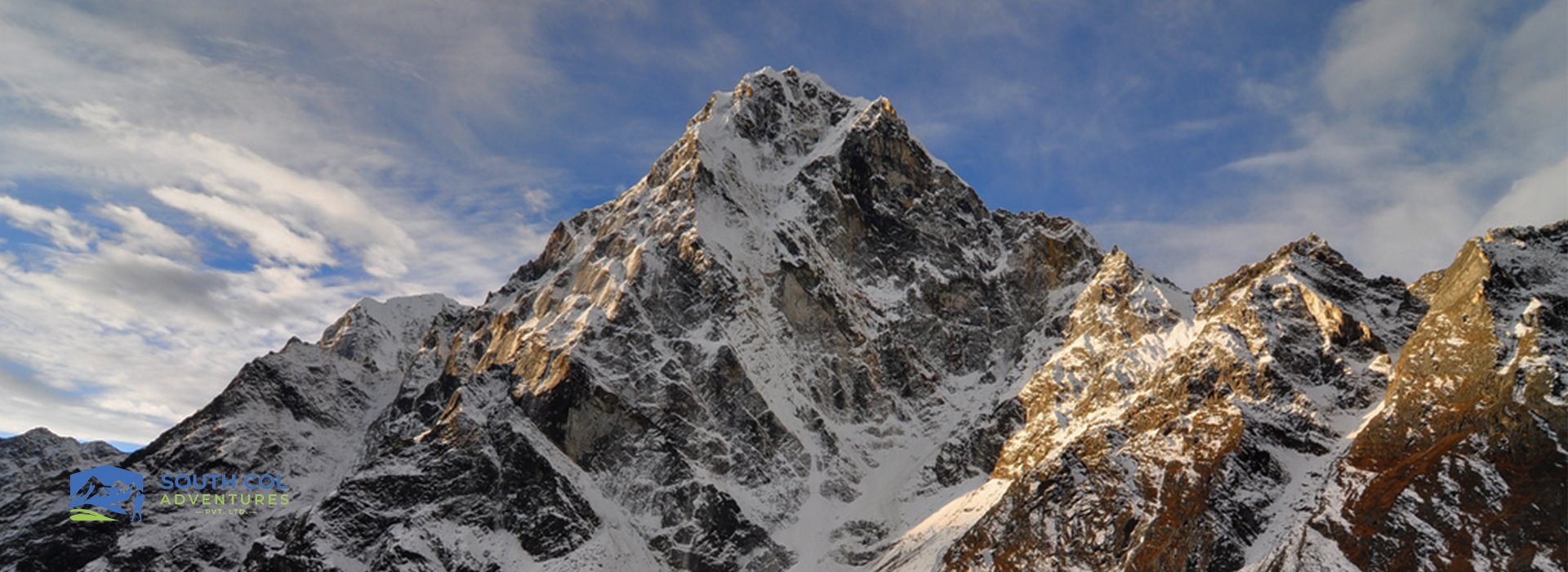
About Cholatse Peak (6,440M)
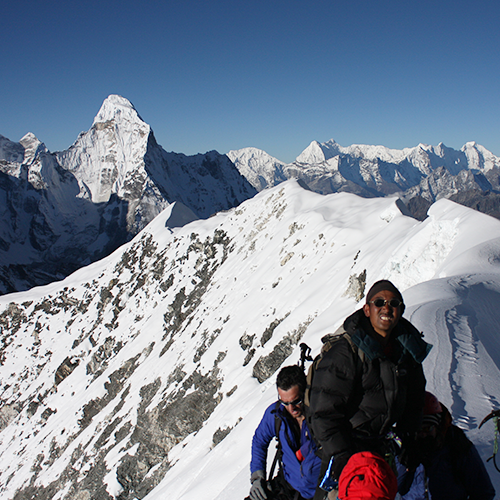
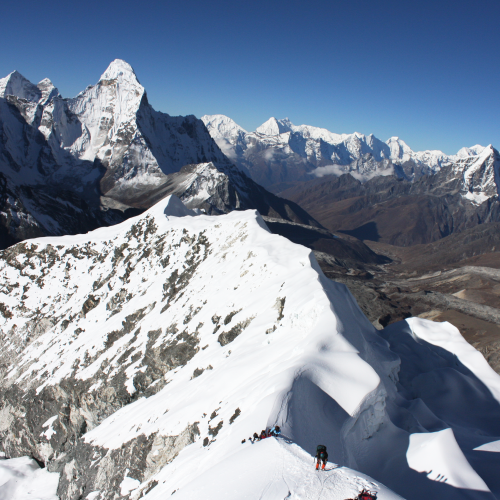
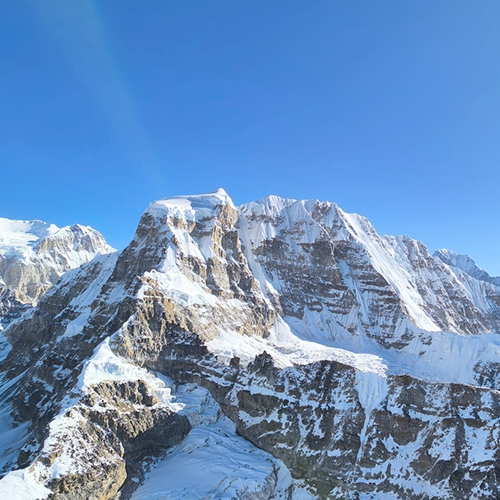
Cholatse Peak Climbing is a challenging and rewarding 6,000-meter Himalayan climbing adventure in Nepal, taking experienced mountaineers into the spectacular Khumbu region and to the 6,440-meter (21,128-foot) summit of Cholatse Peak. Also known as Jobo Lhaptshan, Cholatse rises dramatically between the Gokyo and Khumbu valleys, offering an extraordinary combination of technical climbing, high-altitude wilderness, Sherpa culture and spectacular Himalayan scenery. From the mountain and its surrounding valleys, climbers can enjoy breathtaking views of Mount Everest, Lhotse, Makalu, Cho Oyu, Nuptse, Ama Dablam and other prominent peaks of the Khumbu Himalaya.
Cholatse Peak has an important place in Nepal's mountaineering history, with its first ascent completed in 1982 via the southwest ridge by an American climbing team. Today, Cholatse is regarded as a demanding Himalayan climbing objective for mountaineers seeking a serious Cholatse Peak expedition at 6,440 meters. Unlike easier trekking peaks, the mountain combines a challenging approach through the Everest region with steep snow and ice, exposed terrain and technical climbing sections, making it particularly appealing to climbers with previous high-altitude and mountaineering experience.
The difficulty of Cholatse Peak Climbing comes from both its altitude and technical nature. Climbers should be physically fit and experienced with crampons, ice axe techniques, fixed ropes, ascenders, descenders, harnesses and movement on steep snow, ice and rock. Depending on current route and weather conditions, the ascent can involve demanding technical sections and exposed terrain. Proper acclimatization is equally important, which is why the South Col Adventures itinerary gradually gains altitude through Namche Bazaar, Dole, Machhermo, Gokyo and Thangnak before reaching the Cholatse climbing area. With South Col Adventures, climbers receive experienced mountain support, carefully planned acclimatization, climbing logistics, permit assistance and professional guidance throughout the expedition.
The Cholatse Peak climbing route also makes the expedition unique, combining one of Nepal's most scenic trekking regions with a demanding technical summit. The journey passes through the renowned Gokyo Valley, includes acclimatization around Gokyo and Gokyo Ri, and continues toward the high alpine terrain surrounding Cholatse before the summit attempt. For experienced mountaineers, Cholatse offers a more technical alternative to popular Nepal trekking peaks such as Mera Peak, Island Peak and Lobuche Peak. With its 6,440-meter summit, technical climbing terrain, dramatic Himalayan landscapes and rewarding summit experience, Cholatse Peak Climbing in Nepal is an ideal objective for experienced climbers looking to progress toward more demanding high-altitude mountaineering and Himalayan expeditions.
Cholatse Peak Climbing - Key Highlights
- Summit Cholatse Peak at 6,440 m (21,128 ft)
- Take on one of the more technical climbing objectives in Nepal's Khumbu region
- Trek through the spectacular Everest and Gokyo regions
- Explore the beautiful Gokyo Valley and Gokyo Lakes
- Acclimatize with a hike to Gokyo Ri at 5,357 m
- Cross challenging high-altitude and glacial terrain
- Experience steep snow, ice and technical rock climbing
- Develop and apply advanced rope, crampon and ice-axe skills
- Enjoy panoramic views of Everest, Lhotse, Makalu, Cho Oyu, Nuptse and Ama Dablam
- Experience authentic Sherpa culture and Himalayan mountain communities
- Trek through Sagarmatha National Park
- Enjoy a scenic flight between Kathmandu and Lukla
- Climb with experienced local mountain guides and Sherpa support
What is Cholatse Peak?
Cholatse Peak is a spectacular mountain in the Khumbu region of Nepal, standing at approximately 6,440 meters above sea level. The mountain is also known as Jobo Lhaptshan and is connected to Taboche by a long ridge. Its dramatic north and east faces are particularly visible from the Everest Base Camp trekking route around Dughla.
The name Cholatse is commonly explained from Tibetan terms in which "Cho" refers to a lake, "La" to a pass and "Tse" to a peak, giving the meaning "Lake Pass Peak." The mountain's location near the Cho La and Gokyo region adds to the appeal of the expedition.
Why Climb Cholatse Peak?
Cholatse Peak offers a very different experience from a conventional Everest-region trek. It combines the spectacular scenery of the Khumbu and Gokyo valleys with the commitment and technical demands of Himalayan mountaineering.
For experienced climbers, the attraction lies in the mountain's steep terrain, exposed ridges, technical snow and ice, and demanding summit route. It provides an opportunity to test climbing skills at 6,440 meters while exploring one of Nepal's most iconic mountain regions.
The approach itself is also part of the experience. The journey through Namche Bazaar, Dole, Machhermo and Gokyo introduces climbers to Sherpa communities, alpine valleys, glacial landscapes and some of the most recognizable Himalayan scenery in Nepal.
Cholatse is therefore not simply a summit objective—it is a complete high-altitude expedition combining trekking, acclimatization, technical climbing, Himalayan culture and mountain exploration.
Cholatse Peak Climbing Route
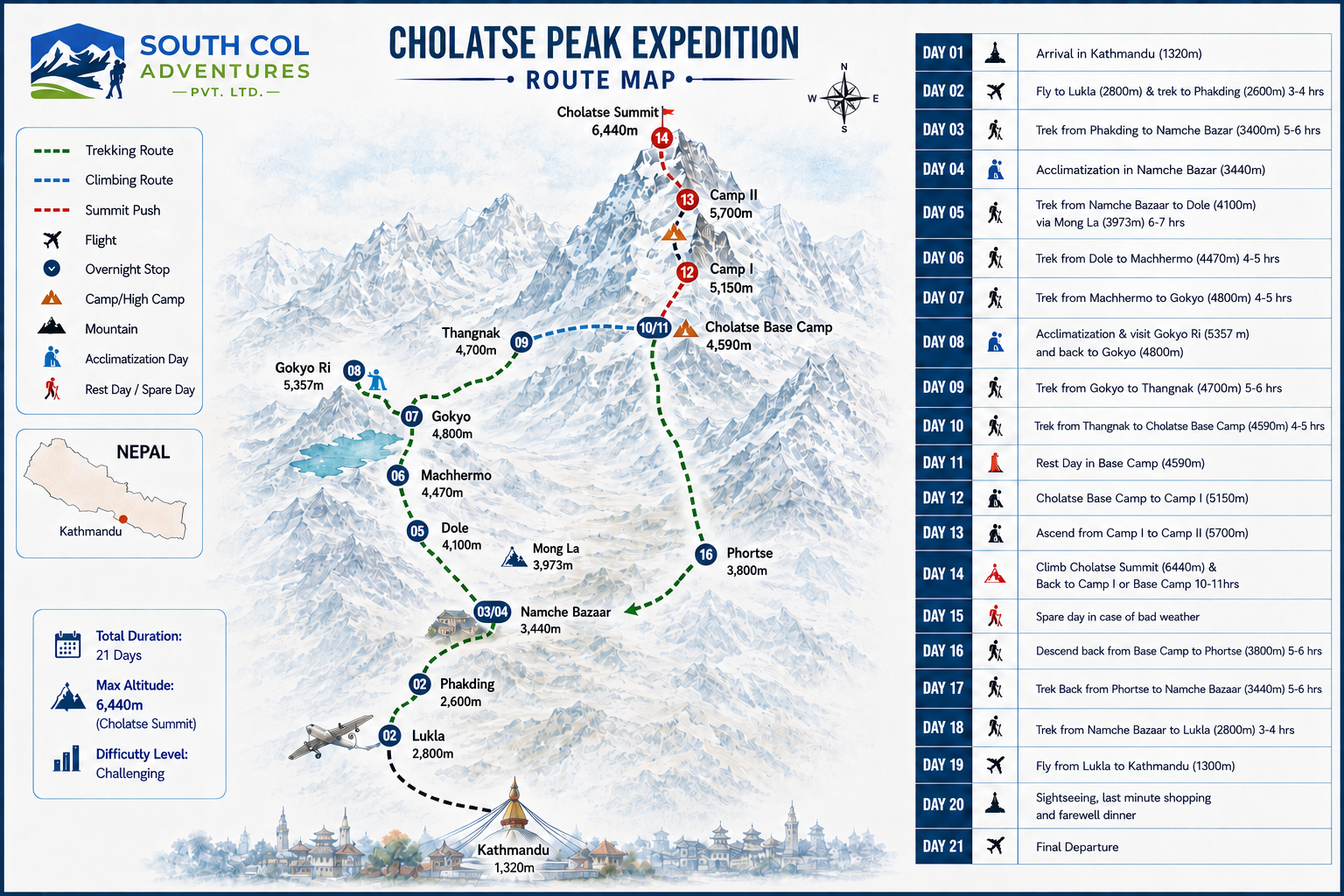
The Cholatse Peak climbing route begins with a scenic flight from Kathmandu to Lukla and follows the classic Everest-region trail through Namche Bazaar and the Gokyo Valley before entering the high-altitude climbing terrain of Cholatse.
Main Route
Kathmandu → Lukla → Phakding → Namche Bazaar → Dole → Machhermo → Gokyo → Gokyo Ri → Thangnak → Cholatse Base Camp → Camp I → Camp II → Cholatse Peak Summit → Cholatse Base Camp → Phortse → Namche Bazaar → Lukla → Kathmandu
The route gradually ascends from the lush lower Khumbu valleys through traditional Sherpa settlements and into the high-altitude landscapes of the Gokyo Valley and Ngozumpa Glacier. After reaching Gokyo, climbers undertake an acclimatization hike toward Gokyo Ri (5,357 m) before continuing to Thangnak and Cholatse Base Camp.
From Cholatse Base Camp, the journey changes from high-altitude trekking to technical mountaineering. Climbers progress through Camp I and Camp II, navigating steep snow, ice, rock and exposed terrain before making the summit attempt on Cholatse Peak at 6,440 meters. After the summit, the expedition descends through Cholatse Base Camp and Phortse, eventually retracing the scenic Khumbu trail to Namche Bazaar and Lukla before flying back to Kathmandu.
Cholatse Peak Climbing Difficulty
Cholatse Peak is a technically challenging 6,000-meter mountain and is not recommended as a first mountaineering experience.
The difficulty comes from a combination of altitude, steep terrain, exposure, technical climbing and unpredictable Himalayan weather. The southwest ridge involves demanding snow, ice and rock terrain, and experienced climbers need to be comfortable using mountaineering equipment and rope systems. Current climbing references describe the route as an advanced technical objective rather than a simple walk-up peak.
Major challenges include:
- High-altitude climbing above 6,000 m
- Steep snow and ice
- Technical rock sections
- Exposed ridges
- Glacier travel
- Fixed-rope climbing
- Crampon and ice-axe movement
- Ascender and descender use
- Long summit-day effort
- Cold temperatures and strong winds
- Rapidly changing mountain weather
For this reason, climbers should have previous experience on high-altitude peaks and should be confident with fundamental mountaineering techniques before attempting Cholatse.
Is Cholatse Peak Suitable for Beginners?
Cholatse Peak is not recommended for first-time peak climbers.
Although Cholatse is below 7,000 meters, its technical character makes it considerably different from many introductory trekking peaks. Previous experience with steep snow and ice, rock climbing, glacier travel, crampon techniques, ice-axe use and fixed-rope systems is highly recommended.
Climbers should also have experience dealing with high altitude, cold conditions, long trekking days and demanding summit attempts.
If you are new to Himalayan peak climbing, peaks such as Mera or Island Peak may provide a more appropriate progression toward technical mountaineering. Cholatse should be approached as a serious technical climbing objective.
Technical Climbing Skills Required for Cholatse
Successful Cholatse Peak climbing requires more than physical endurance. Climbers should be familiar with:
- Crampon techniques
- Ice-axe techniques
- Front-pointing
- Fixed-rope ascent and descent
- Ascender/Jumar use
- Descender and rappelling techniques
- Harness and rope systems
- Glacier travel
- Basic crevasse-rescue awareness
- Movement on steep snow and ice
- Rock climbing in mountaineering boots
- Belay and rope-management techniques
A professional climbing team can provide guidance and route support, but climbers should arrive with a suitable foundation of technical mountaineering skills.
Cholatse Peak Climbing Acclimatization
Acclimatization is a critical component of the Cholatse expedition because the summit reaches 6,440 m.
The itinerary gradually increases altitude through Namche Bazaar, Dole, Machhermo and Gokyo before moving toward Thangnak and Cholatse Base Camp. The acclimatization day at Gokyo, including the hike toward Gokyo Ri, provides an opportunity to gain additional high-altitude exposure before entering the climbing phase.
At altitude, climbers should maintain a controlled pace, stay properly hydrated, eat sufficiently and communicate any symptoms of altitude illness to the climbing leader immediately.
No acclimatization schedule can eliminate altitude-related risk, so the itinerary and summit plan should remain flexible according to individual condition and mountain weather.
Best Time for Cholatse Peak Climbing
The best seasons for Cholatse Peak Climbing in Nepal are generally:
Spring – March to May
Spring is one of the main Himalayan climbing seasons. The weather generally becomes more favorable for high-altitude climbing, while mountain views can be excellent during stable periods.
Autumn – September to November
Autumn is another major climbing season, particularly after the monsoon. The lower trekking trails are generally drier and visibility can be excellent.
For a technical mountain such as Cholatse, the actual summit window depends not only on the calendar but also on snow, ice, wind, route condition and the weather forecast.
Winter brings considerably colder conditions, while monsoon conditions can make the approach and climbing environment more difficult.
Cholatse Peak Summit Experience
The Cholatse summit push is the defining moment of the expedition.
The team begins early to maximize the available weather window and daylight. The ascent requires concentration, controlled movement and efficient use of climbing equipment. Steep snow and ice, exposed terrain and technical sections make the final ascent physically and mentally demanding.
From the summit of Cholatse Peak at 6,440 m, climbers can enjoy an extraordinary panorama of the Khumbu Himalaya when weather and visibility allow. The surrounding skyline includes some of the world's highest and most iconic mountains, including Mount Everest, Lhotse, Makalu, Cho Oyu, Nuptse and Ama Dablam.
The summit is only half of the final objective. Climbers must descend carefully through the same demanding terrain, making rope management, energy conservation and guide communication essential throughout the descent.
Cholatse Peak Climbing Cost
The cost of Cholatse Peak Climbing in Nepal depends on the duration, group size, permits, accommodation, domestic flights, climbing staff, porter support, equipment, food, transportation and logistical requirements.
South Col Adventures currently lists the Cholatse Peak package from US$3,400 on its website. Travelers should confirm the latest departure date, price and inclusions before booking because expedition costs can change according to season and operating requirements.
A professional Cholatse climbing package should clearly explain what is included and excluded, particularly regarding climbing permits, domestic flights, accommodation, meals, climbing equipment, personal equipment, insurance and evacuation costs.
Cholatse Peak Climbing Permits
Climbing Cholatse Peak requires the necessary mountaineering, conservation area and trekking permits. Permit requirements and fees may vary depending on the route and current regulations. The required permits may include:
- Cholatse Peak Climbing Permit/Royalty
- Sagarmatha National Park Permit
- Pasang Lhamu Rural Municipality Permit
South Col Adventures handles the required permits, government fees and official documentation as part of the Mera Peak Climbing package, allowing climbers to focus on preparation and the expedition.
Physical Preparation for Cholatse Peak
Strong physical preparation is essential before joining a Cholatse Peak expedition.
Training should focus on cardiovascular endurance, leg and core strength, uphill movement and carrying a backpack over long distances.
Recommended Training
- Long-distance hiking
- Uphill hiking
- Stair climbing
- Cardiovascular training
- Leg and core strength training
- Endurance workouts
- Hiking with a loaded backpack
- Previous high-altitude trekking
- Technical climbing practice
- Snow and ice climbing experience
Because Cholatse involves technical climbing, physical fitness should be combined with actual mountaineering skills.
Cholatse Peak Climbing with South Col Adventures
South Col Adventures organizes Cholatse Peak Climbing with an emphasis on experienced mountain leadership, careful acclimatization, reliable logistics and safety-focused expedition planning.
Our support includes experienced trekking and climbing personnel, route and permit arrangements, accommodation, transportation, climbing logistics and contingency planning for changing mountain conditions.
We focus on:
- Experienced climbing guides and Sherpa support
- Carefully planned acclimatization
- Technical climbing guidance
- Reliable trekking and expedition logistics
- Permit and documentation arrangements
- Quality accommodation and camping support
- Weather monitoring and flexible summit planning
- Safety-focused climbing practices
- Personalized expedition support
- Responsible tourism in the Everest region
For a technically demanding mountain such as Cholatse, preparation and decision-making are essential. Our team works with climbers throughout the expedition to maintain a structured and safety-conscious approach to the summit.
Book Your Cholatse Peak Climbing Adventure
Ready to climb Cholatse Peak at 6,440 meters?
Join South Col Adventures for a challenging Himalayan mountaineering expedition through the spectacular Khumbu and Gokyo valleys, combining high-altitude trekking, acclimatization, technical climbing preparation, experienced Sherpa support and the unforgettable experience of standing on the summit of Cholatse Peak.
Check Availability → Book Cholatse Peak Climbing → Ask Our Climbing Team