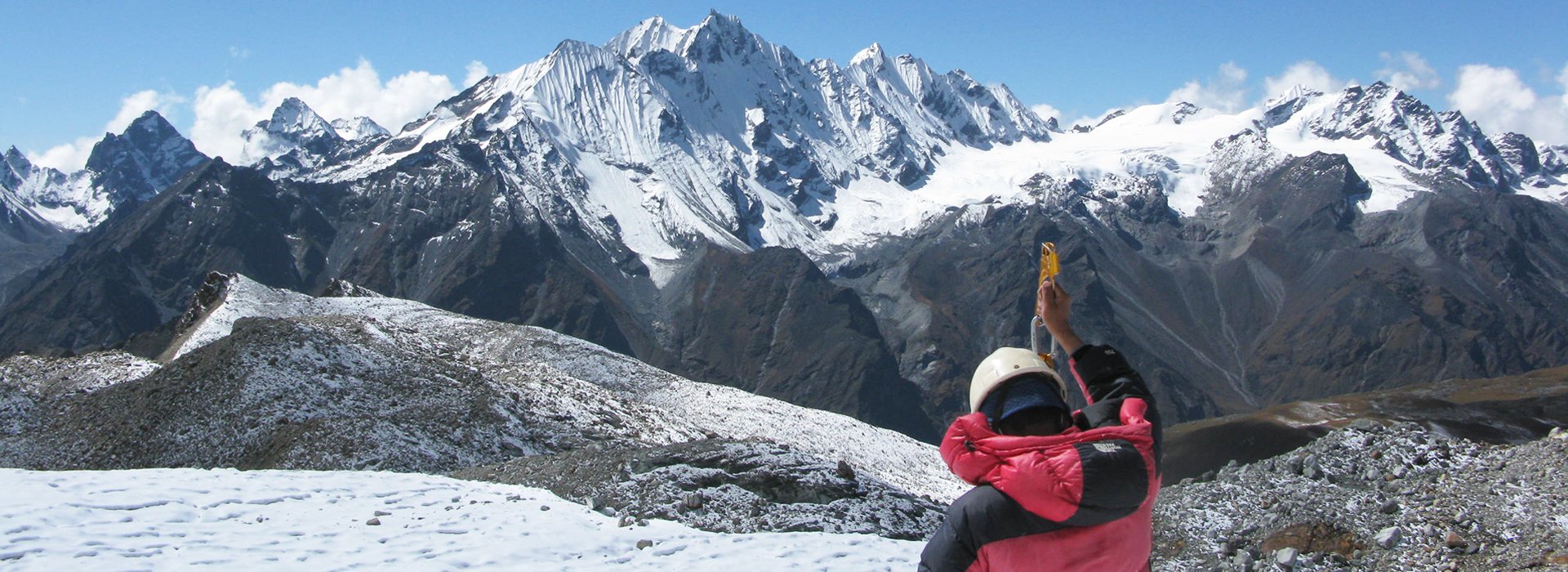
About Langsisa Ri Peak (6,427M)
Langsisa Ri Peak Climbing is a challenging high-altitude adventure in Nepal's spectacular Langtang region, taking you deep into the upper Langtang Valley and to the 6,427-meter (21,086-foot) summit of Langsisa Ri. Located beyond the famous mountain settlement of Kyanjin Gompa, Langsisa Ri combines scenic Himalayan trekking, remote alpine landscapes, traditional Tamang culture and demanding peak climbing. The journey offers spectacular views of Langtang Lirung, Shishapangma, Dorje Lakpa, Ganesh Himal, Naya Kanga, Yala Peak and other surrounding Himalayan mountains, subject to weather and visibility.
The approach to Langsisa Ri follows one of Nepal's most beautiful Himalayan trekking routes, beginning from Syabrubesi and passing through Lama Hotel, Langtang Village and Kyanjin Gompa before entering the remote high-altitude terrain toward Langsisa Kharka and Langsisa Ri Base Camp. Kyanjin Gompa provides an important acclimatization point, while an excursion toward Tserko Ri helps prepare climbers for the higher elevations ahead. Beyond the main Langtang Valley trail, the landscape becomes increasingly rugged and alpine, creating a genuine Himalayan expedition experience away from the busier trekking routes.
At 6,427 meters, Langsisa Ri is a serious high-altitude climbing objective rather than a conventional trekking destination. The expedition involves long trekking days, steep and uneven terrain, cold temperatures, changing mountain weather and potentially challenging snow and ice conditions. Climbers should have strong physical fitness, previous high-altitude trekking or mountaineering experience and proper acclimatization. Depending on route and conditions, climbing equipment such as crampons, ice axe, harness, helmet, ascender, carabiners and rope may be required. With South Col Adventures, the Langsisa Ri Peak Climbing itinerary combines gradual altitude gain, acclimatization at Kyanjin Gompa, climbing preparation, experienced mountain guides and organized expedition logistics for a carefully planned journey toward the summit.
The adventure is particularly attractive to experienced trekkers and aspiring mountaineers looking for a challenging 6,000-meter peak in the Langtang region and a less conventional alternative to Nepal's more frequently climbed peaks. Compared with Mera Peak, Island Peak, Lobuche Peak and Tengkoma Peak, Langsisa Ri offers a distinctive combination of Langtang Valley trekking, remote alpine terrain and a 6,427-meter summit objective. For climbers seeking a demanding Himalayan experience that combines cultural encounters, wilderness trekking, acclimatization and high-altitude mountaineering, Langsisa Ri Peak Climbing in Nepal provides a rewarding and memorable adventure.
Langsisa Ri Peak Climbing Highlights
- Summit Langsisa Ri at 6,427 meters
- Experience challenging high-altitude peak climbing in the Langtang region
- Trek through the spectacular Langtang Valley
- Explore Kyanjin Gompa, one of the region's important Buddhist settlements
- Acclimatize with a hike toward Tserko Ri
- Trek through Langsisa Kharka and remote alpine landscapes
- Experience snow, ice, rocky moraine and high-altitude terrain
- Enjoy views of Langtang Lirung, Shishapangma, Dorje Lakpa and Ganesh Himal
- Experience traditional Tamang culture and Himalayan mountain life
- Train in essential climbing techniques before the summit attempt
- Spend nights at Langsisa Ri Base Camp and High Camp
- Attempt the summit with an experienced climbing team
- Combine Langtang trekking with genuine Himalayan peak climbing
- Suitable for experienced trekkers and climbers seeking a challenging 6,000-meter objective
What Is Langsisa Ri Peak?
Langsisa Ri is a 6,427-meter Himalayan peak in the Langtang region of Nepal. It lies in the high mountain landscape beyond Kyanjin Gompa and offers a demanding combination of trekking, acclimatization and alpine peak climbing.
Unlike a standard Langtang Valley trek, Langsisa Ri requires climbers to progress beyond the trekking route toward Langsisa Kharka, Base Camp and High Camp, followed by a demanding summit attempt.
The mountain is particularly attractive to experienced climbers looking for a less-commercialized Himalayan climbing experience while remaining within the spectacular Langtang region.
Why Climb Langsisa Ri Peak?
1. Reach a 6,427m Himalayan Summit
Langsisa Ri provides an opportunity to climb above 6,400 meters in one of Nepal's spectacular mountain regions.
2. Experience Technical High-Altitude Climbing
The climb involves alpine terrain and requires appropriate mountaineering equipment, preparation and climbing skills.
3. Explore the Langtang Valley
The approach takes you through forests, villages, yak pastures, Buddhist settlements and dramatic Himalayan landscapes.
4. Experience Kyanjin Gompa
Kyanjin Gompa provides an important cultural and acclimatization stop before the expedition moves toward the higher mountain terrain.
5. Enjoy Exceptional Himalayan Views
Weather permitting, the summit area provides views toward several major peaks of the Langtang and surrounding Himalayan ranges.
6. Combine Trekking and Mountaineering
The expedition combines several days of high-altitude trekking with genuine peak-climbing preparation and a summit attempt.
7. Challenge Yourself Above 6,000m
Langsisa Ri is appropriate for climbers looking for a demanding Himalayan objective rather than a conventional trekking experience.
Langsisa Ri Peak Climbing Route
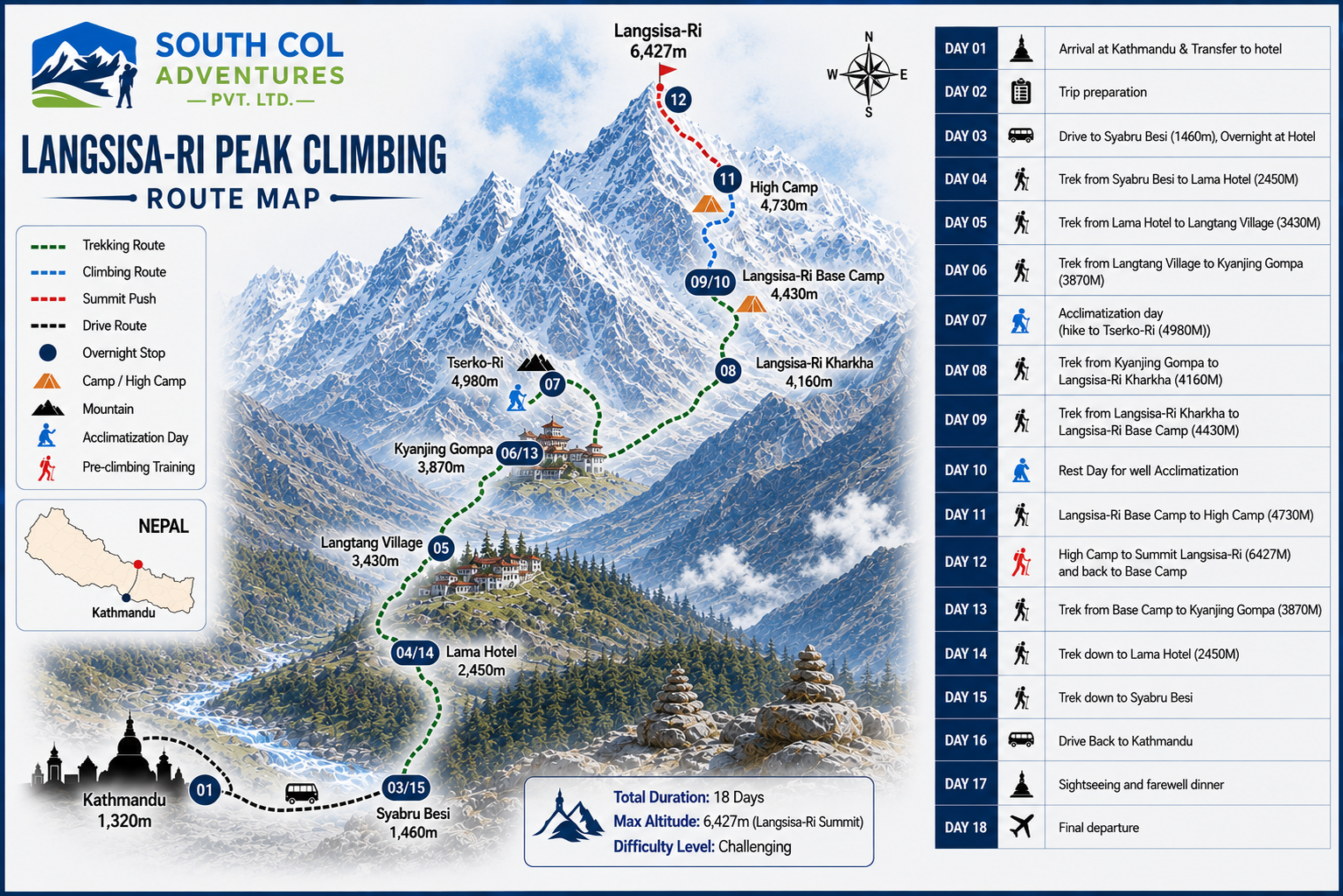
Kathmandu → Syabrubesi → Lama Hotel → Langtang Village → Kyanjin Gompa → Tserko Ri → Langsisa Kharka → Langsisa Ri Base Camp → Langsisa Ri High Camp → Langsisa Ri Summit → Base Camp → Kyanjin Gompa → Lama Hotel → Syabrubesi → Kathmandu
This route combines the classic Langtang Valley approach with an increasingly remote and demanding alpine section. The current South Col itinerary follows this general progression and includes acclimatization at Kyanjin Gompa before continuing toward Langsisa Kharka and Base Camp.
Langsisa Ri Peak Climbing Difficulty
Langsisa Ri is a challenging high-altitude peak, and climbers should not approach it as a normal trekking route.
The major challenges include:
- 6,427m maximum altitude
- Reduced oxygen at high elevations
- Long trekking and climbing days
- Steep and uneven terrain
- Snow and ice conditions
- Cold temperatures and strong winds
- Remote mountain environment
- Technical climbing sections
- Demanding summit day
- Rapidly changing Himalayan weather
Previous experience with high-altitude trekking and basic mountaineering is strongly recommended.
Good physical conditioning, acclimatization, technical preparation and appropriate climbing equipment are essential.
Who Is Langsisa Ri Peak Climbing Suitable For?
Langsisa Ri is best suited to physically fit and experienced trekkers or climbers who are comfortable spending multiple days at high altitude.
Previous experience with:
- High-altitude trekking
- Crampons
- Ice axe
- Harness
- Fixed ropes
- Ascenders
- Glacier or snow travel
is highly beneficial.
First-time peak climbers should not assume that Langsisa Ri is an entry-level 6,000-meter climb. The combination of altitude, terrain, weather and technical requirements makes proper preparation essential.
Best Time for Langsisa Ri Peak Climbing
The primary climbing seasons are:
Spring: March to May
Autumn: September to November
These periods generally provide more favorable conditions for trekking and climbing, although Himalayan weather remains unpredictable.
Spring offers improving weather and excellent mountain scenery, while autumn typically provides clear skies and good visibility following the monsoon.
Winter brings substantially colder conditions and snow, while monsoon can produce rainfall, cloud cover and difficult trail conditions.
Langsisa Ri Peak Climbing Permits
Climbers need the applicable Langsisa Ri climbing permit/royalty, Langtang National Park entry permit and relevant local permits, subject to current Nepal regulations.
South Col Adventures handles the required expedition documentation and permit arrangements as part of the package. The existing package specifically lists the peak climbing royalty, National Park entry permit and local permits.
Langsisa Ri vs Mera Peak vs Island Peak
Nepal offers several 6,000-meter-class climbing opportunities, each with different approaches, landscapes and climbing characteristics.
| Feature | Langsisa Ri | Mera Peak | Island Peak |
|---|---|---|---|
| Elevation | 6,427m | 6,476m | 6,189m |
| Region | Langtang | Hinku Valley | Khumbu |
| Approach | Langtang Valley | Hinku Valley | Everest region |
| Main experience | Remote alpine climbing | High-altitude Himalayan climbing | Technical peak climbing |
| Major attraction | Langtang mountain environment | High summit and remote approach | Everest-region scenery |
| Experience | High-altitude experience recommended | Fitness and preparation essential | Climbing preparation beneficial |
The best choice depends on a climber's experience, preferred region, available time, desired level of challenge and personal objectives.
Book Your Langsisa Ri Peak Climbing Adventure
Ready to take on the 6,427-meter Langsisa Ri Peak?
Join South Col Adventures for an 18-day Himalayan adventure and experience the spectacular Langtang region, trek through traditional Himalayan settlements, acclimatize beneath towering peaks and challenge yourself on a demanding high-altitude summit.
Check Availability → Book Langsisa Ri Peak Climbing → Ask Our Climbing Team