Highest Trekking Peak In Nepal - Mera Peak
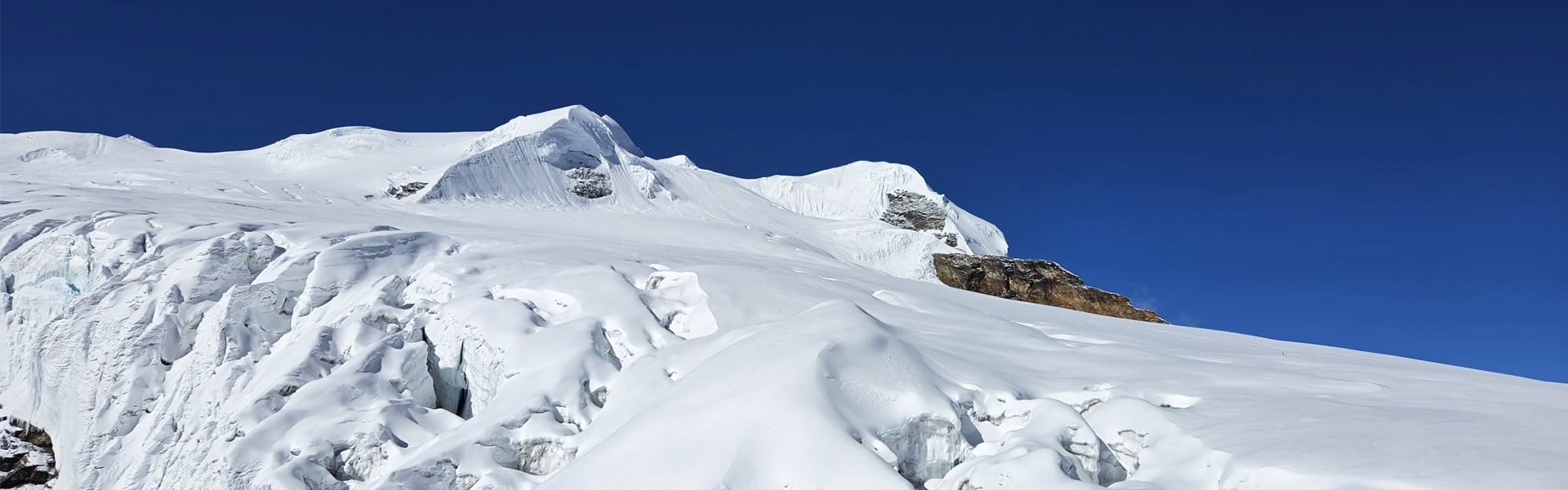
Mera Peak is widely recognized as the highest trekking peak in Nepal, rising to 6,476 meters (21,247 feet) in the Mahalangur section of the Himalaya. But the phrase “highest trekking peak” can be confusing. It does not mean that Mera Peak is the highest mountain in Nepal, nor does it mean that climbing the mountain is simply an extension of trekking.
The distinction comes from Nepal’s peak-climbing classification system. The Nepal Mountaineering Association (NMA) categorizes Mera as a trekking peak and specifically describes it as the highest trekking peak in Nepal. NMA sources identify three major summits in the Mera massif: Mera North (6,476 m), Mera Central (6,470 m), and Mera South (6,065 m).
At the same time, Mera's classification should not be mistaken for an indication that it is an easy mountain. At nearly 6,500 meters, altitude, cold, glacier travel, weather and endurance become major factors. Its standard climbing route is relatively straightforward technically compared with more technical Himalayan peaks, but the altitude makes Mera Peak a serious mountaineering objective.
What Does “Trekking Peak” Mean in Nepal?
The term trekking peak has a specific meaning in Nepal's mountaineering system.
A trekking peak is a mountain designated for organized climbing by trekkers and mountaineers who have appropriate preparation and basic mountaineering skills. The term does not mean that the summit can necessarily be reached by ordinary trekking alone.
Mera Peak illustrates this distinction particularly well.
The approach involves trekking through the remote Hinku Valley, but reaching the summit involves high-altitude snow and glacier terrain. Climbers may need skills such as:
- Walking with crampons
- Using an ice axe
- Traveling safely on snow and glacier terrain
- Using ropes and climbing equipment
- Managing exposure to extreme altitude
- Understanding mountain weather
- Making safe decisions during a summit attempt
Therefore, “trekking peak” describes the mountain's administrative and climbing category, not the absence of mountaineering challenges.
How Does the NMA Classify Mera Peak?
The Nepal Mountaineering Association (NMA) is the organization responsible for administering Nepal's designated trekking peaks and associated climbing permissions.
NMA publications specifically identify Mera Peak as a trekking peak and describe it as the highest trekking peak in Nepal. The NMA's Voice of Himalaya also identifies its three major summits as Mera North at 6,476 m, Mera Central at 6,470 m and Mera South at 6,065 m.
This classification is important because it separates Mera from Nepal's larger expedition mountains, which are managed under a different mountaineering framework.
In simple terms:
Mera Peak is called Nepal's highest trekking peak because its approximately 6,476-meter summit is within the NMA's trekking-peak category, and the NMA itself identifies Mera as the highest peak in that category.
An Important Elevation Note
There is some historical confusion surrounding Mera Peak's elevation. Older Nepal government tourism documentation has listed 6,654 m for Mera Peak.
Modern NMA publications, however, identify the Mera massif with Mera North at 6,476 m and Mera Central at 6,470 m.
For modern SEO and visitor information, 6,476 m (21,247 ft) is the appropriate elevation to use when referring to Mera Peak's highest summit.
Why Is Mera Peak Called the Highest Trekking Peak in Nepal?
There are three important reasons behind the title.
1. Mera reaches 6,476 meters
Mera North reaches 6,476 meters, placing the mountain well above 6,000 meters and making it an exceptionally high objective within Nepal's trekking-peak category. NMA's publications recognize Mera as the highest trekking peak in Nepal.
2. It remains within the trekking-peak classification
The significance of Mera is not simply its elevation. The mountain combines very high altitude with a comparatively straightforward standard climbing route.
That combination is what makes Mera distinctive: it provides an opportunity to enter the world of high-altitude mountaineering without the level of technical climbing associated with many major Himalayan expedition peaks.
3. “Trekking peak” does not mean “easy peak”
This is perhaps the most important point.
Mera's classification makes it a trekking peak, but its altitude makes it a serious mountain.
A climber can encounter:
- Thin air
- Severe cold
- Snow and ice
- Glacier terrain
- Strong winds
- Rapidly changing weather
- Altitude-related illness
- Exhaustion during the summit push
So, Mera Peak is accessible compared with many technical Himalayan mountains, but it should never be treated as an ordinary trek.
Trekking Peak vs Expedition Peak
The difference between a trekking peak and an expedition peak is primarily related to classification, technical requirements, climbing administration and the nature of the objective—not simply altitude.
| Feature | Trekking Peak | Expedition Peak |
|---|---|---|
| Main purpose | High-altitude climbing accessible to prepared trekkers | Major mountaineering objective |
| Technical difficulty | Often comparatively moderate, depending on peak | Can range from technical to extremely technical |
| Required skills | Basic mountaineering skills may be sufficient for some routes | Often requires advanced climbing and expedition skills |
| Altitude | Can exceed 6,000 m | Frequently 6,000–8,000+ m |
| Route | Often established and comparatively straightforward | May involve complex glacier, rock, ice or mixed climbing |
| Logistics | Generally simpler | Usually more extensive |
| Mera Peak | Trekking peak | — |
| Everest / Ama Dablam / Manaslu | — | Expedition objectives |
The distinction is therefore not “easy mountain versus difficult mountain.”
A trekking peak can still be physically demanding and dangerous, while some expedition peaks may have technically easier sections. The classification provides a framework for managing different types of climbing objectives.
Mera Peak Is High—but Relatively Less Technical
One of the reasons Mera Peak has become such an important mountain in Nepal's climbing landscape is the contrast between its altitude and technical character.
At almost 6,500 meters, Mera is significantly higher than many popular trekking and peak-climbing objectives. Yet its standard route is generally regarded as technically less demanding than the routes on several neighboring climbing peaks.
This creates an interesting mountaineering profile:
Very high altitude + comparatively straightforward climbing = Mera Peak
That does not eliminate the need for mountaineering preparation. Instead, it shifts much of the challenge toward:
- Endurance
- Acclimatization
- Altitude management
- Glacier awareness
- Cold-weather performance
- Pacing
- Weather judgment
This is why Mera Peak is often considered an excellent transition between high-altitude trekking and Himalayan mountaineering.
Why Mera Peak's 6,476-Meter Altitude Matters
Altitude is the defining challenge of Mera Peak.
At 6,476 meters, the summit environment is dramatically different from the conditions experienced during normal trekking. The amount of available oxygen is much lower than at sea level, and the human body has to work considerably harder to maintain normal physical performance.
As elevation increases, climbers may experience:
- Reduced physical performance
- Shortness of breath
- Headache
- Fatigue
- Poor sleep
- Loss of appetite
- Difficulty maintaining a normal pace
More serious altitude-related problems can also occur.
For this reason, Mera Peak should never be judged only by its technical difficulty. A mountain can be technically straightforward and still be extremely demanding because of altitude.
This is particularly important for first-time peak climbers. Previous trekking experience, physical conditioning, gradual acclimatization and competent mountain leadership all contribute to a safer summit attempt.
Why Mera Is Different From a Normal Trek
A trek generally involves walking on established trails at elevations where the body can function comparatively normally.
Mera Peak takes the experience considerably higher.
The journey begins as a Himalayan trek through the Hinku Valley, but progressively enters a high-altitude climbing environment. Eventually, climbers leave the normal trekking landscape and encounter snow, ice and glaciated terrain.
That transition is what makes Mera so appealing.
You begin as a trekker.
You finish the journey as a high-altitude climber.
The mountain therefore occupies a unique position between conventional Himalayan trekking and full-scale expedition mountaineering.
Mera Peak's Three Summits
Another reason Mera Peak deserves careful explanation is that Mera is not simply a single pointed summit.
The massif contains three major summits:
| Summit | Elevation |
|---|---|
| Mera North | 6,476 m |
| Mera Central | 6,470 m |
| Mera South | 6,065 m |
These elevations are given in NMA publications.
The distinction matters because historical climbing records and modern descriptions have sometimes used different elevations and summit names. The Himalayan Database records the May 1953 ascent by J. O. M. Roberts and Sen Tenzing at 6,470 m, while modern references commonly associate that ascent with Mera Central.
For a deeper discussion of the mountain's three summits and climbing history, readers can explore the main Mera Peak article on South Col Adventures.
Is Mera Peak Easy Because It Is a Trekking Peak?
No. This is one of the most important misconceptions to avoid. Calling Mera the highest trekking peak in Nepal does not mean that it is suitable for anyone who can complete a normal Himalayan trek. At 6,476 meters, Mera demands substantially more from the body than a standard trekking route.
A successful attempt requires an appropriate combination of:
Physical fitness
Long days of walking at altitude require cardiovascular endurance and strong legs.
Acclimatization
The body needs time to adapt as elevation increases. Rushing toward the summit increases the risks associated with altitude.
Basic mountaineering skills
Depending on route and conditions, climbers need to understand equipment such as crampons, ice axe, harness and rope systems.
Mental endurance
Summit day can be long, cold and exhausting. The ability to maintain a steady pace and make sensible decisions is essential.
Professional mountain support
Experienced guides can help with route decisions, weather assessment, pacing, climbing techniques and emergency response.
Mera Peak: The Highest Trekking Peak, Not the Highest Mountain in Nepal
It is also important to understand what the phrase “highest trekking peak in Nepal” actually means. Mera Peak is not Nepal's highest mountain. Nepal's highest mountain is Mount Everest at 8,848.86 meters.
Mera's distinction comes from the combination of: its elevation + its NMA trekking-peak classification. This is why the phrase should be understood as a category-specific distinction, rather than a claim that Mera is the highest mountain in the country.
NMA itself uses the description “highest trekking peak in Nepal,” making it a particularly relevant phrase when discussing Mera's position within Nepal's trekking-peak system.
Why Mera Peak Remains One of Nepal's Most Significant Trekking Peaks
Mera Peak's appeal goes beyond its numerical elevation.
It combines several characteristics rarely found together:
- 6,476-meter summit
- Remote Hinku Valley setting
- Three major summits
- NMA trekking-peak classification
- Comparatively straightforward standard climbing terrain
- Genuine high-altitude mountaineering experience
- Panoramic views of major Himalayan peaks
- Strong historical and mountaineering significance
- Growing reputation for ski mountaineering
NMA research also highlights Mera's importance for skiing and ski-mountaineering, documenting a substantial skiable area around the mountain.
From the summit region, climbers can also experience exceptional Himalayan panoramas, including views toward Everest, Lhotse, Makalu, Cho Oyu and Kanchenjunga.
So, Why Is Mera Peak Called Nepal's Highest Trekking Peak?
The answer can be summarized simply:
Mera Peak is called the highest trekking peak in Nepal because its highest summit reaches 6,476 meters and the Nepal Mountaineering Association classifies Mera as a trekking peak and describes it as Nepal's highest trekking peak.
But the title should never be interpreted as “easy to climb.”
Mera is better understood as a high-altitude mountaineering objective with a comparatively less technical standard route. Its greatest challenges often come from altitude, endurance, cold, glacier conditions and weather rather than highly technical rock or ice climbing.
That combination is precisely what makes Mera Peak one of Nepal's most compelling mountains for climbers moving from Himalayan trekking toward mountaineering.