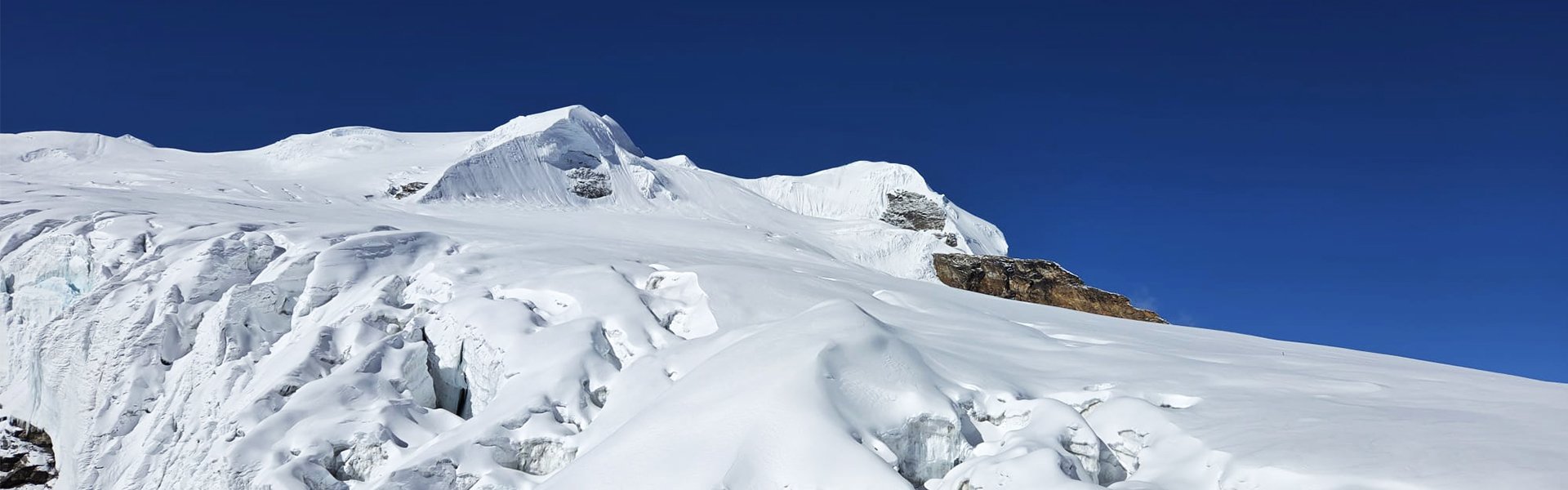
Mera Peak Climbing Difficulty: How Hard Is Mera Peak Really?
Mera Peak climbing difficulty is one of the most important questions to consider before attempting a 6,476-meter Himalayan summit. Mera Peak is often described as one of Nepal's more accessible trekking peaks because its standard route is comparatively straightforward from a technical perspective. However, that does not mean it is an easy climb.
At 6,476 meters (21,247 feet), Mera Peak presents a serious high-altitude challenge. The main difficulties come from thin air, long trekking days, cold temperatures, snow and glacier terrain, physical fatigue, acclimatization and the demanding summit push. The climb may require crampons, an ice axe, harness, helmet and rope, depending on route and mountain conditions.
In simple terms, Mera Peak is less technically demanding than many Himalayan climbing peaks, but it is physically demanding because of its extreme altitude.
For climbers who are properly prepared, acclimatized and supported by experienced mountain professionals, Mera Peak can be an achievable and highly rewarding introduction to high-altitude Himalayan peak climbing.
How Difficult Is Mera Peak Climbing?
So, how difficult is Mera Peak?
The best answer is that Mera Peak is a challenging high-altitude climb with moderate technical requirements.
The standard route does not normally involve advanced rock climbing or highly complicated technical climbing systems. However, climbers must be prepared to walk for several hours on consecutive days, gain substantial elevation, travel through snow and glacial terrain and function effectively in an environment where oxygen levels are significantly lower than at sea level.
Mera Peak Difficulty at a Glance
| Difficulty Factor | Level | What It Means |
|---|---|---|
| Approach trekking | Moderate | Long days and uneven mountain |
| Altitude | Very demanding | Summit reaches 6,476 m |
| Physical endurance | High | Requires sustained cardiovascular and leg endurance |
| Technical climbing | Moderate | Basic mountaineering skills are required |
| Glacier/snow | Challenging | Crampon and ice-axe skills may be needed |
| Summit day | Very demanding | Long, cold and physically strenuous |
| Weather | Variable | Conditions can change rapidly |
| Overall difficulty | Challenging | Serious high-altitude mountaineering objective |
The key distinction is important: Mera Peak difficulty is driven more by altitude and endurance than by advanced technical climbing.
Why Is Mera Peak Difficult Despite Being a Trekking Peak?
One of the biggest misconceptions about Mera Peak is that the term “trekking peak” means easy. It does not.
Mera Peak is one of Nepal's highest and most popular trekking peaks, reaching 6,476 meters. The mountain combines a long approach through the remote Hinku Valley with increasingly demanding alpine terrain before the final summit attempt. South Col Adventures' current itinerary gradually progresses from Lukla through Paiya, Panggom, Ningsow, Chhatra Khola, Kothe, Thaknak and Khare before reaching Mera High Camp and the summit.
The higher you climb, the more the environment changes:
Trekking trail → high-altitude trail → alpine terrain → snow/glacier → mountaineering → 6,476 m summit
At lower elevations, the challenge is primarily walking. Higher up, reduced oxygen, cold, snow and physical fatigue become increasingly important.
This is why Mera Peak should be approached as a real Himalayan climbing objective, not simply as an extension of a trekking holiday.
Mera Peak Technical Difficulty vs Physical Difficulty
Understanding the difference between technical difficulty and physical difficulty is essential when assessing Mera Peak.
Mera Peak Technical Difficulty
The standard Mera Peak route is comparatively straightforward technically, but climbers still need basic mountaineering skills.
Depending on conditions, climbing may involve:
- Crampons
- Ice axe
- Harness
- Helmet
- Rope travel
- Snow and glacier travel
- Walking on steep or uneven terrain
- Basic movement techniques on snow and ice
South Col Adventures includes climbing preparation around Khare, where climbers can learn and practice essential equipment and techniques before moving toward High Camp and the summit.
You do not necessarily need years of technical mountaineering experience to attempt Mera Peak. However, you should be prepared to learn and correctly apply basic climbing techniques under high-altitude conditions.
The important point: Mera Peak is not difficult because it requires highly advanced climbing techniques. It is difficult because even simple climbing becomes harder at 6,000+ meters.
Mera Peak Physical Difficulty
The physical difficulty of Mera Peak is considerably more important. At 6,476 meters, the body receives much less oxygen than it does at sea level. Every step requires more effort, recovery takes longer and a pace that feels comfortable at lower elevations can become surprisingly demanding.
Physical challenges include:
- Long trekking days
- Steep ascents and descents
- High altitude
- Low oxygen availability
- Cold temperatures
- Carrying or using climbing equipment
- Walking over snow and glacial terrain
- Early-morning summit ascent
- Physical fatigue
- Long descent after reaching the summit
This is why cardiovascular endurance, leg strength and previous high-altitude experience can make such a significant difference.
For most climbers, the biggest challenge on Mera Peak is not advanced technical climbing—it is maintaining physical and mental performance at extreme altitude.
Mera Peak Altitude Difficulty
Altitude is arguably the single biggest factor behind Mera Peak climbing difficulty. The summit stands at 6,476 meters, while the route gradually progresses from Kathmandu at approximately 1,320 meters to Khare at 5,045 meters, Mera High Camp at around 5,780 meters and finally the summit.
Key elevations on the Mera Peak route
Kathmandu – 1,320 m
↓
Paiya – 2,730 m
↓
Panggom – 2,846 m
↓
Kothe – 3,691 m
↓
Thangnak – 4,358 m
↓
Khare – 5,045 m
↓
Mera High Camp – approximately 5,780 m
↓
Mera Peak Summit – 6,476 m
This elevation progression demonstrates why acclimatization is so important. At higher elevations, climbers may experience reduced appetite, disturbed sleep, headaches, fatigue, breathlessness or other symptoms associated with altitude exposure. Any concerning or worsening symptoms should be taken seriously, and the safest response to significant altitude illness is determined by the mountain team's assessment.
Why acclimatization matters
A well-planned itinerary gives the body time to adapt progressively to increasing elevation. South Col Adventures includes a dedicated acclimatization and climbing-training day at Khare (5,045 m) before the move toward High Camp and the summit.
Acclimatization does not eliminate altitude risk, but it can significantly improve a climber's ability to cope with the high-altitude environment.
Mera Peak Difficulty at Different Stages of the Climb
The difficulty of Mera Peak changes throughout the expedition.
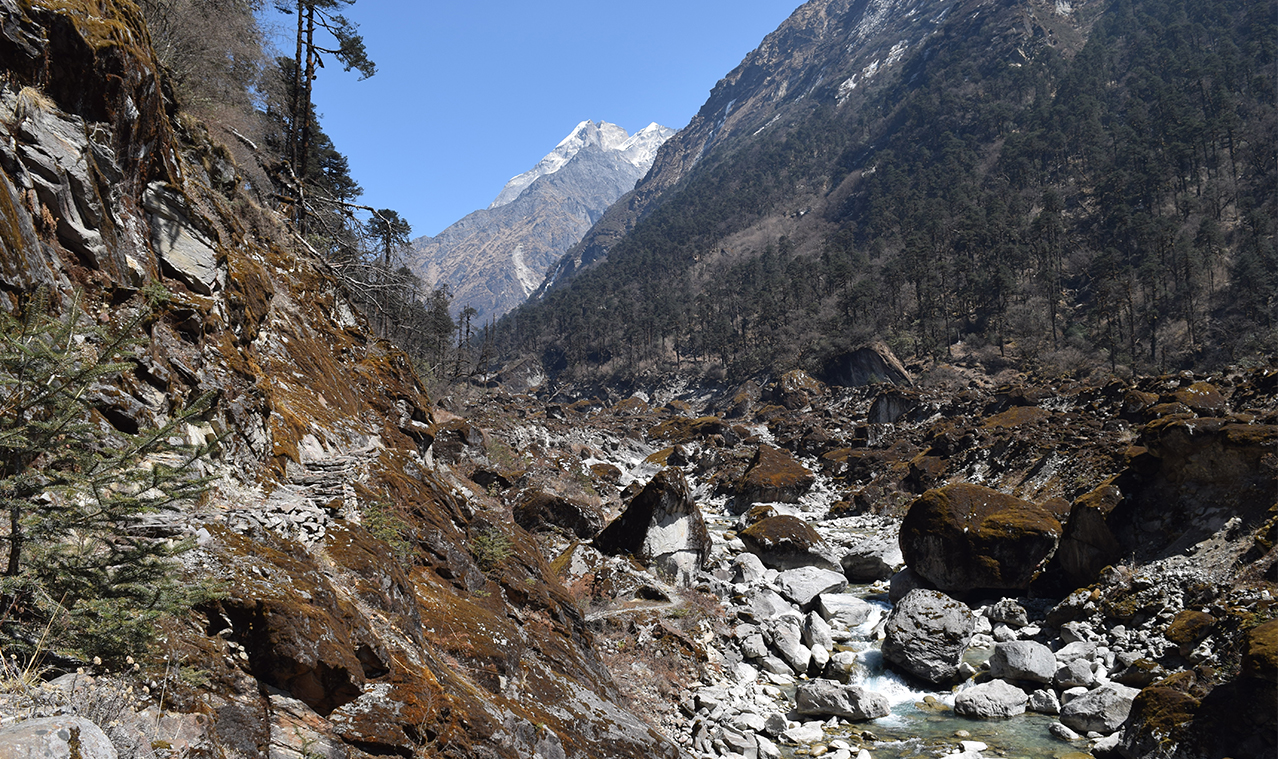
1. Lukla to Kothe: Trekking Challenge
The lower approach passes through forests, mountain villages, suspension bridges and the remote Hinku Valley. At this stage, the primary challenge is building endurance over consecutive trekking days.
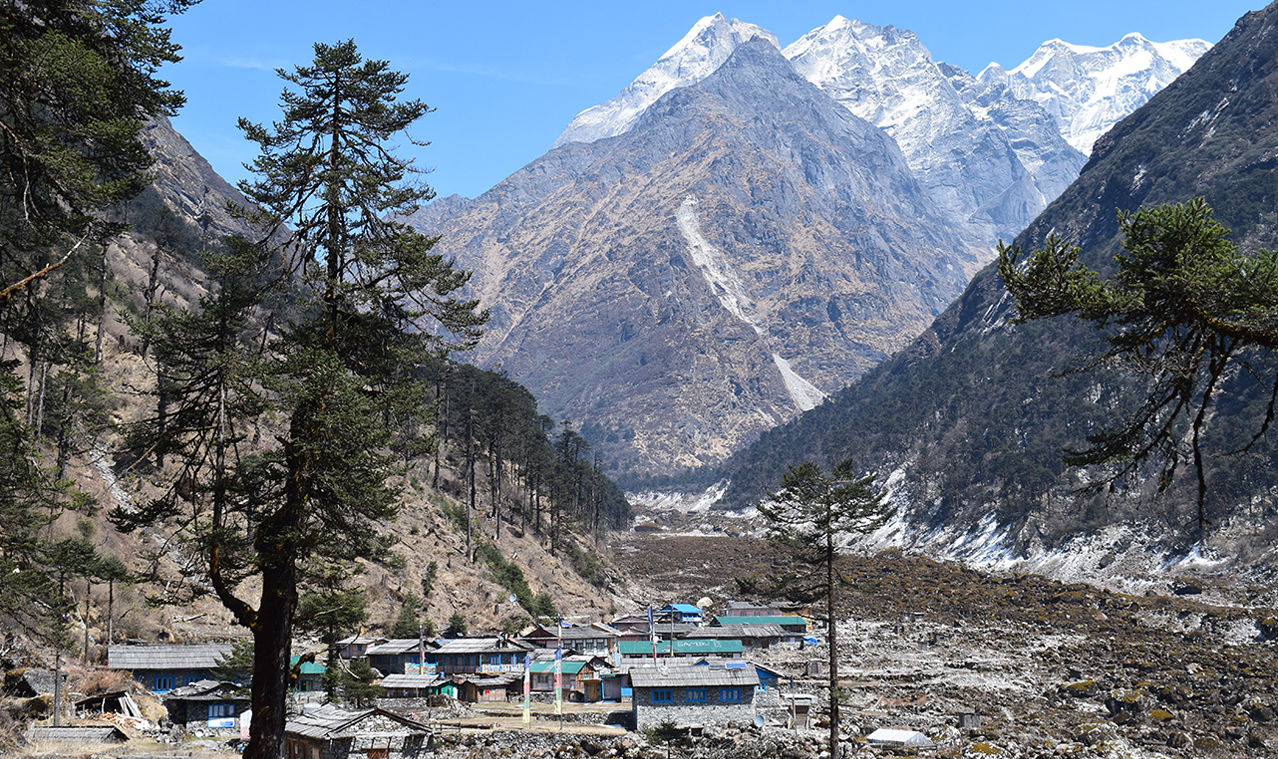
2. Kothe to Thangnak: Increasing Altitude
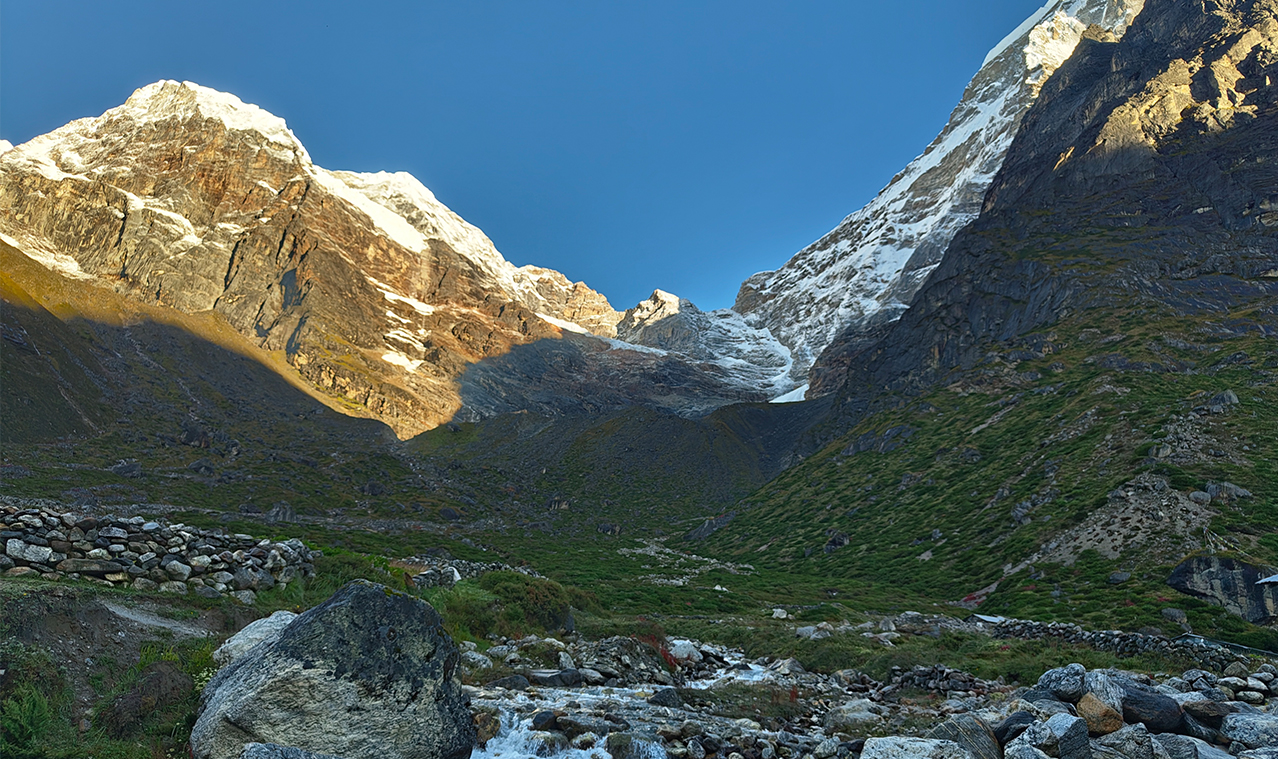
As the route climbs higher, vegetation becomes less dense and the effects of altitude become more noticeable. The trail becomes increasingly alpine, and maintaining a slow, consistent pace becomes important.
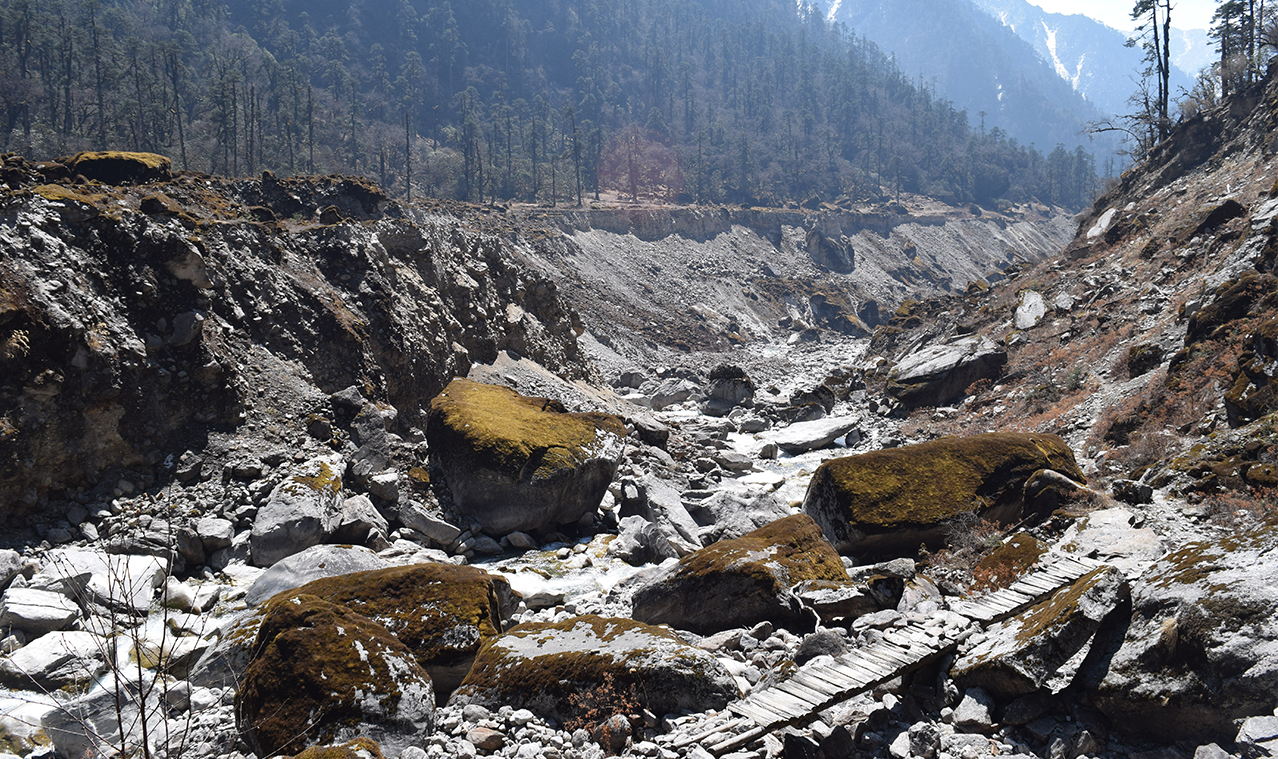
3. Thangnak to Khare: High-Altitude Trekking
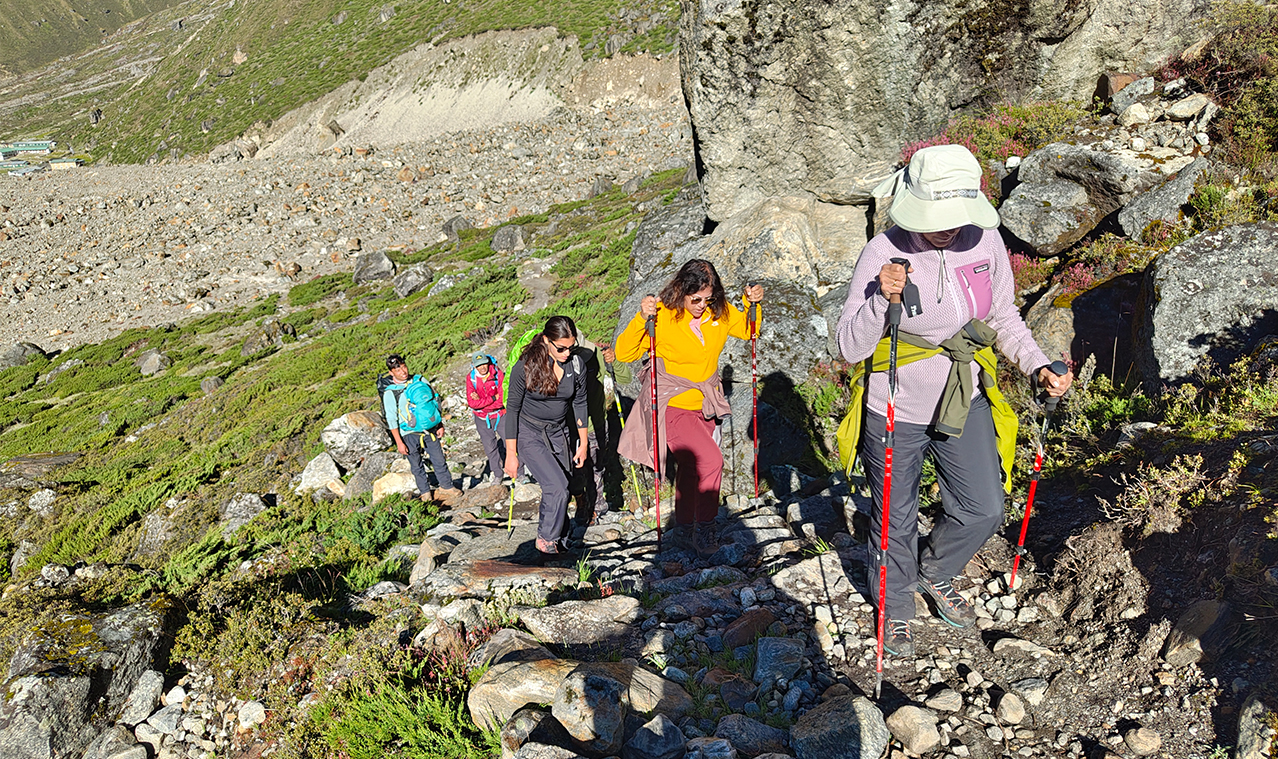
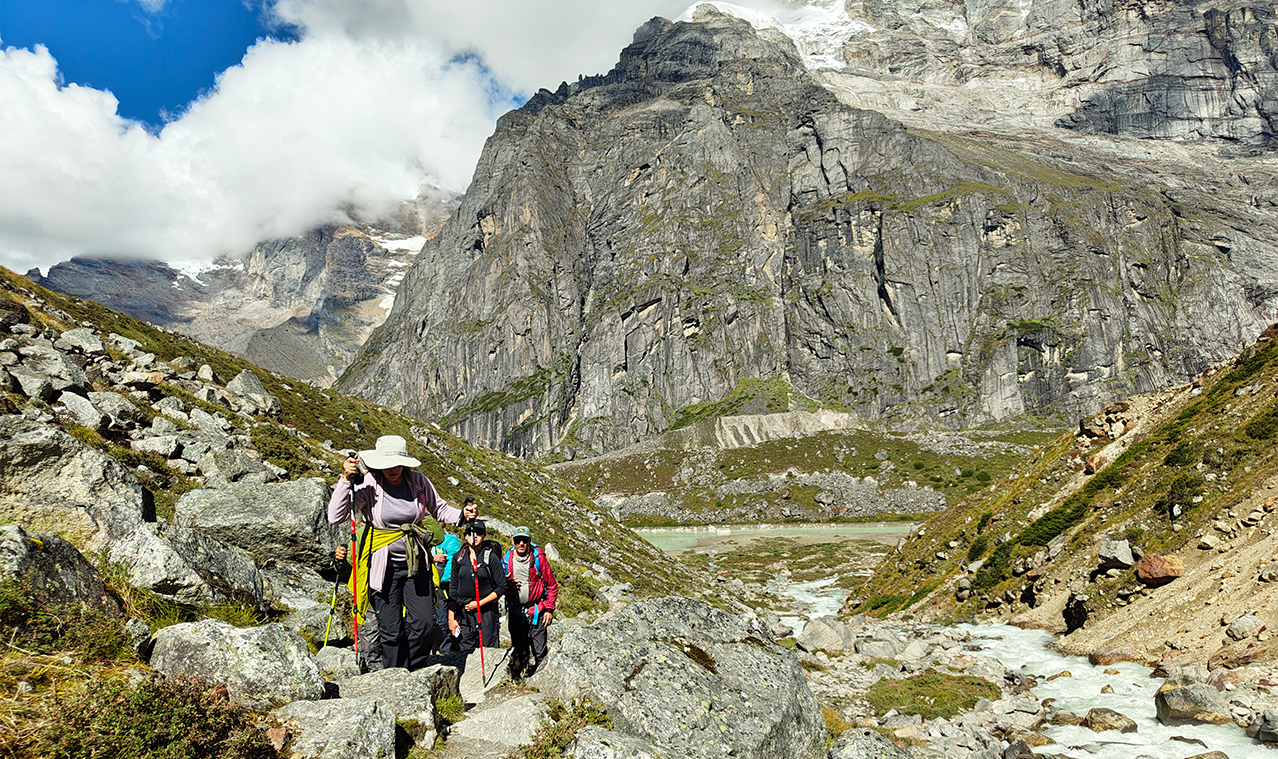
At approximately 4,358 meters at Thangnak and 5,045 meters at Khare, the expedition enters a much more demanding altitude zone. This is where acclimatization becomes particularly important.
4. Khare to High Camp: Mountaineering Begins
The route transitions from high-altitude trekking toward genuine climbing terrain. After a rugged uphill traverse to Base Camp, the crampon point is located just a few meters ahead.
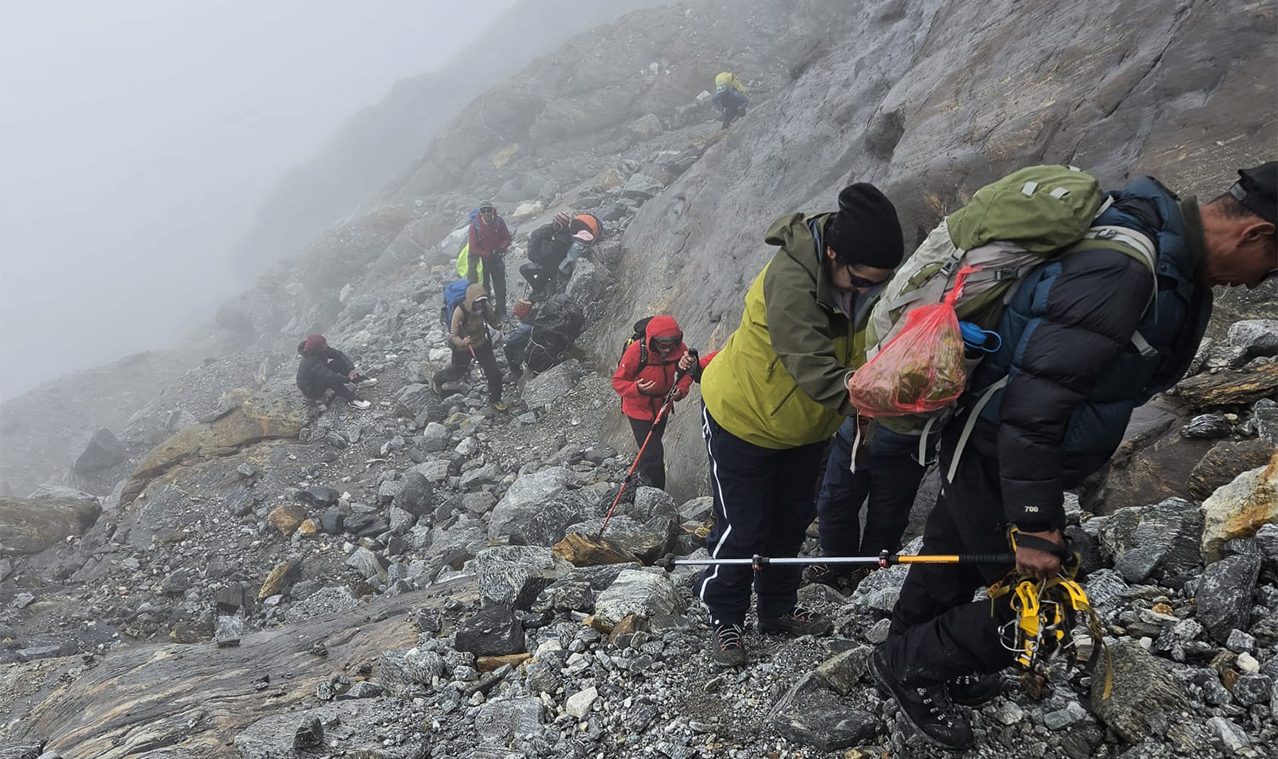
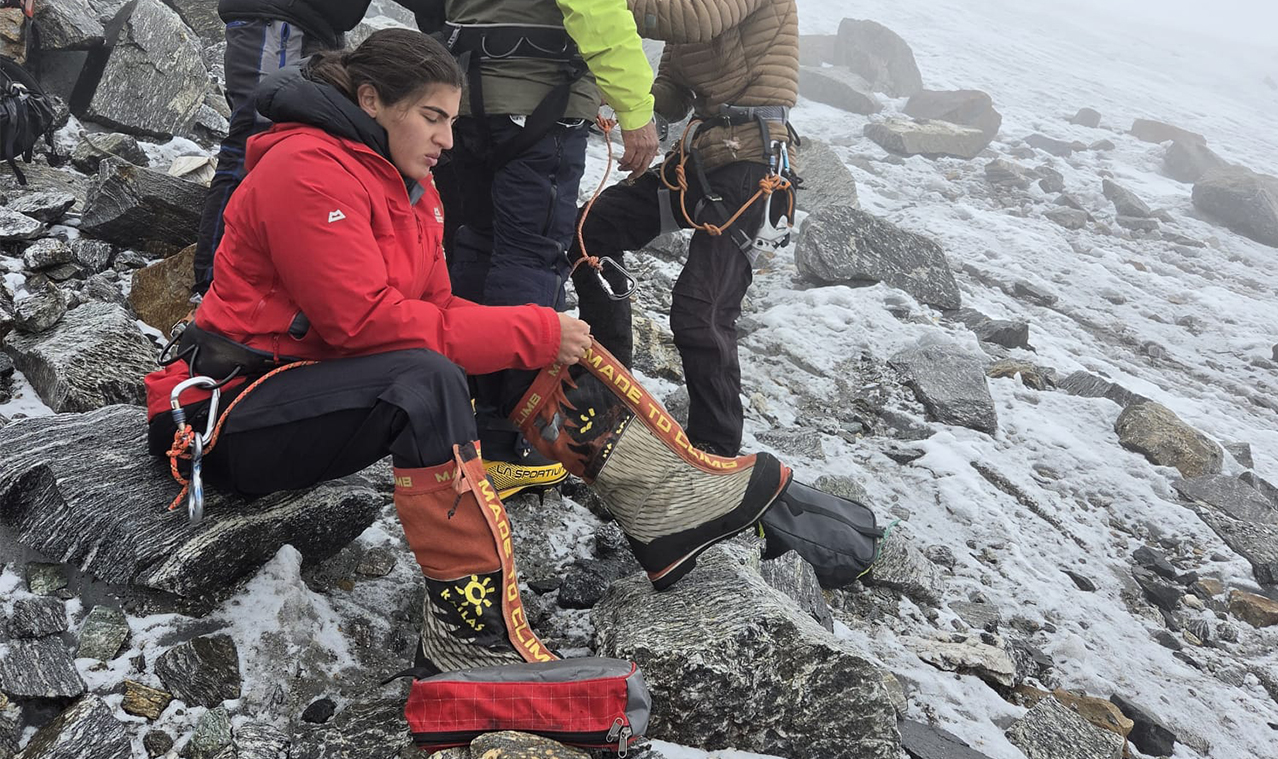
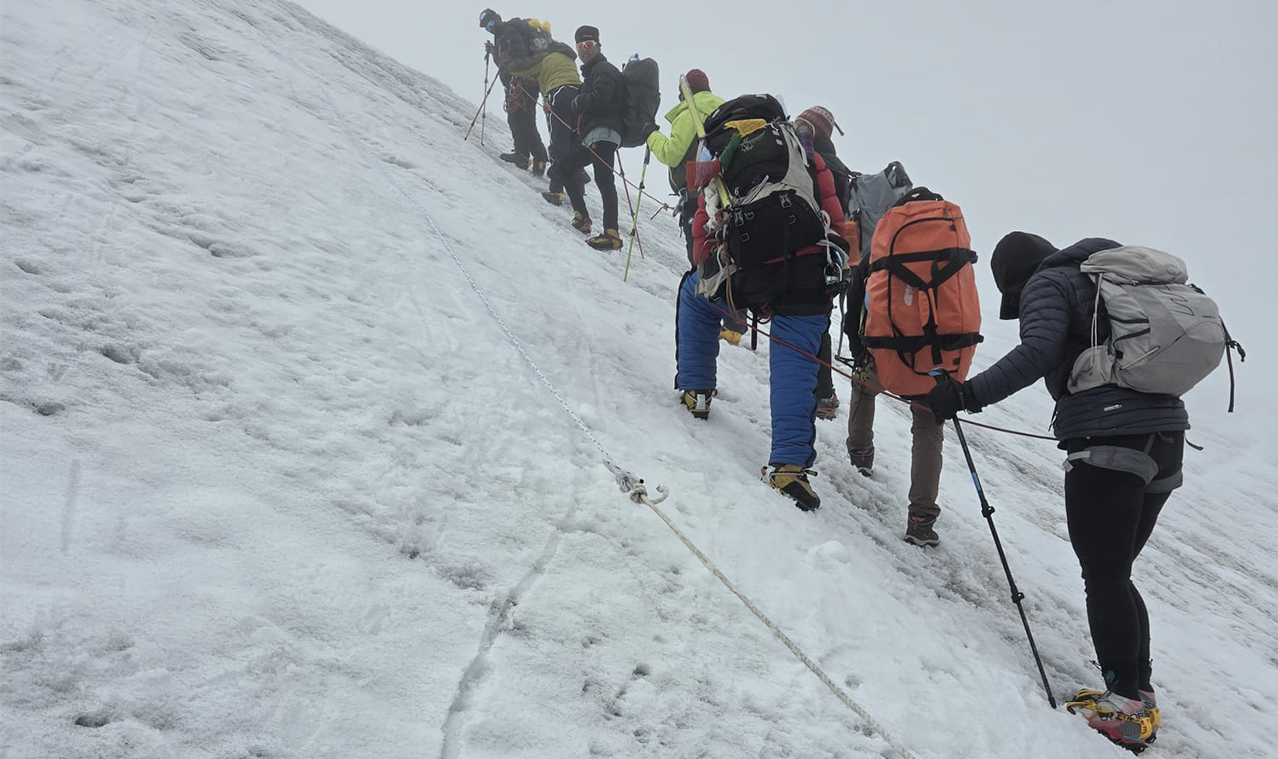
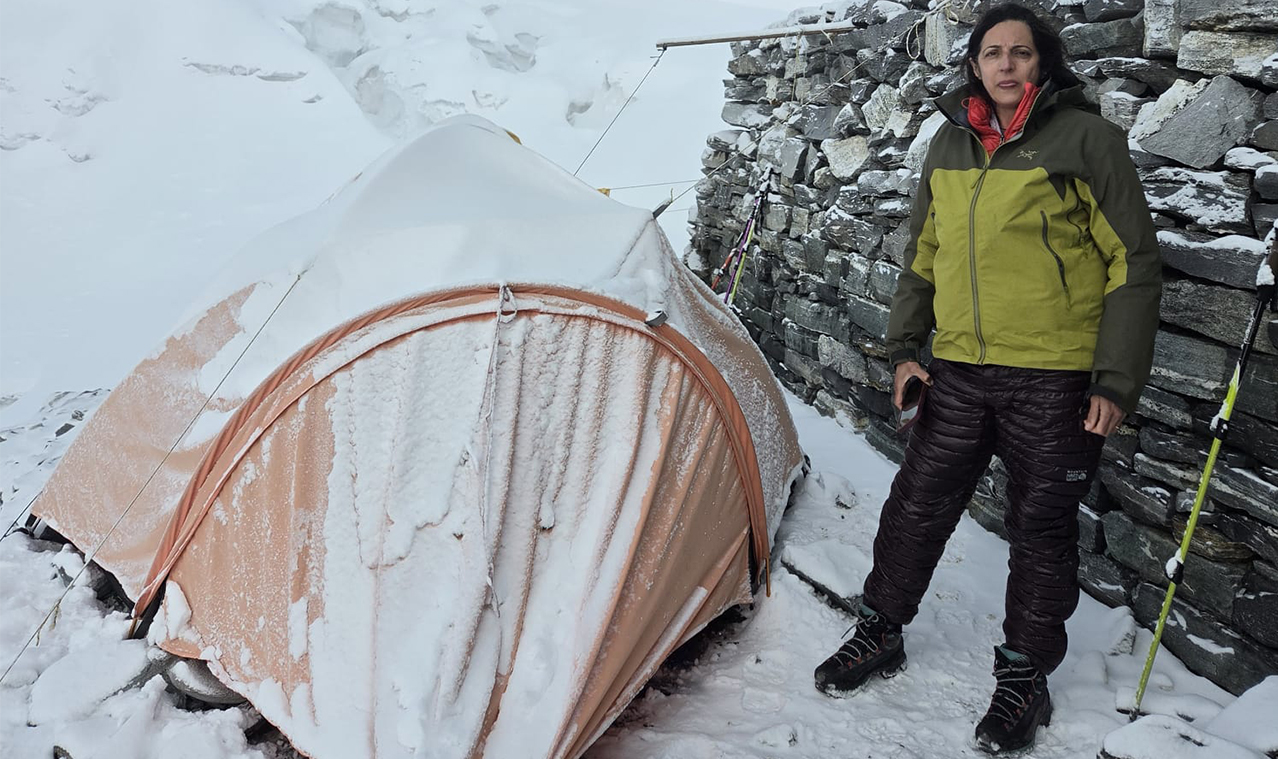
Snow, glacial moraines and colder conditions require greater concentration. This is also where climbing equipment and basic mountaineering techniques become increasingly relevant.
5. High Camp to Summit: The Hardest Stage
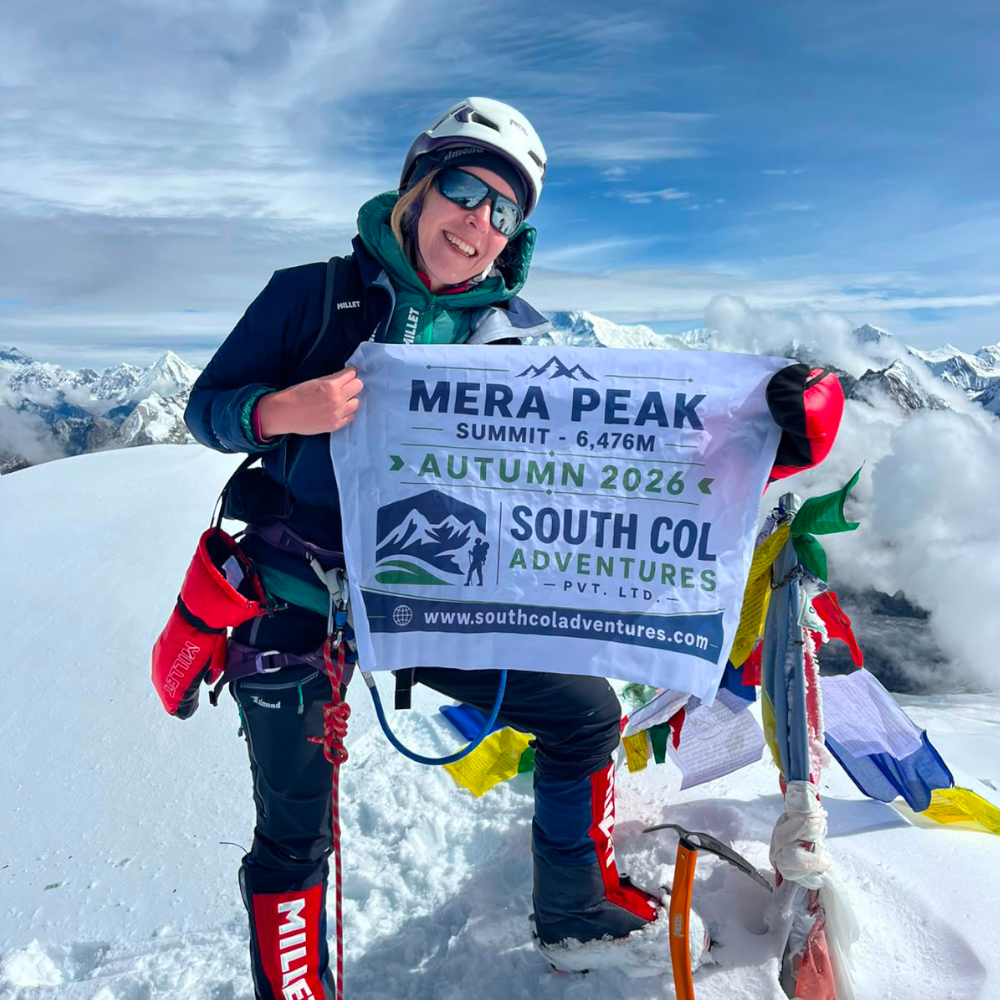
The summit day is normally the most demanding part of the entire expedition. At approximately 5,780 meters at High Camp, climbers begin the summit push in extremely cold conditions and continue toward the 6,476-meter summit.
Is Mera Peak Difficult for Beginners?
Mera Peak can be suitable for well-prepared first-time peak climbers, but it should not be considered a beginner-level trek.
A first-time climber can potentially attempt Mera Peak with professional mountain support, adequate acclimatization and proper physical preparation. Previous high-altitude trekking experience is highly beneficial.
You do not necessarily need extensive previous technical climbing experience, particularly when climbing with an experienced team that provides appropriate instruction.
However, beginners should be comfortable with:
- Multi-day trekking
- Long uphill walks
- Consecutive days of physical activity
- High-altitude environments
- Cold conditions
- Basic climbing equipment
- Snow and glacier travel
- Following professional mountain guidance
The best way to think about Mera Peak climbing difficulty for beginners is: Beginner in mountaineering does not have to mean beginner in physical preparation, trekking or high-altitude awareness.
A fit and properly prepared first-time peak climber has a very different starting point from someone with little trekking experience.
What Makes Mera Peak Harder Than a Normal Trek?
A normal Himalayan trek generally involves walking along established mountain trails, while Mera Peak combines trekking with high-altitude mountaineering.
The progression is:
Stage 1: Trekking
Walking through forests, villages and mountain valleys.
Stage 2: High-Altitude Trekking
Increasing elevation, colder temperatures and thinner air.
Stage 3: Alpine Environment
Snow, ice, moraines and increasingly rugged terrain.
Stage 4: Mountaineering
Crampons, ice axe, harness and rope techniques may become necessary.
Stage 5: Summit Climbing
A long, cold and physically demanding ascent above 6,000 meters.
This is what separates Mera Peak from an ordinary trekking experience.
Mera Peak Summit Day: Why Is It So Difficult?
The summit day is generally the hardest part of the expedition.
The climb begins very early, often around 1-2 AM, allowing the team to take advantage of suitable conditions and maximize summit time. South Col's current itinerary describes the summit day as an 8–9-hour effort from High Camp to the summit and back toward Khare, although actual timing can vary with conditions, pace and route.
Several factors combine to make this day demanding:
Extreme altitude
You are climbing toward 6,476 meters where oxygen availability is significantly reduced.
Cold temperatures
Starting before dawn means experiencing some of the coldest conditions of the expedition.
Long duration
The summit attempt requires sustained effort followed by descent.
Snow and glacier conditions
Depending on conditions, climbers may use crampons, ice axe and rope systems.
Fatigue
Several days of trekking and acclimatization have already accumulated before summit day.
Mental endurance
The summit can feel deceptively close while the remaining ascent still requires considerable effort.
The goal is therefore not to rush. A slow, controlled and sustainable pace is usually more useful than trying to climb quickly.
Mera Peak Climbing Preparation
Good Mera Peak climbing preparation should begin well before arriving in Nepal.
You do not need to become an elite athlete, but you should develop the endurance required to walk uphill for several hours over consecutive days.
Cardiovascular training
Useful activities include:
- Hiking
- Running
- Cycling
- Stair climbing
- Fast walking
- Uphill training
The objective is to improve cardiovascular endurance rather than simply achieve short bursts of speed.
Leg and core strength
Strong legs and a stable core are valuable for steep mountain terrain.
Useful exercises include:
- Squats
- Lunges
- Step-ups
- Hill walking
- Stair climbing
- Core exercises
Hiking with a backpack
Regular hiking with a moderate backpack helps your body adapt to carrying equipment over uneven terrain.
Altitude experience
If possible, previous experience at high altitude can help you understand how your body responds to elevation.
However, previous altitude exposure does not guarantee that you will avoid altitude-related problems on Mera Peak.
Mental preparation
High-altitude climbing requires patience.
You may encounter cold, fatigue, slower progress, changing weather or unexpected delays. Being mentally prepared to adjust your plan is as important as physical fitness.
What Experience Do You Need for Mera Peak?
Different climbers arrive with different levels of experience.
First-Time Peak Climber
A first-time peak climber can potentially attempt Mera Peak with good fitness, adequate preparation, acclimatization and professional support.
Experienced High-Altitude Trekker
Someone with previous high-altitude trekking experience is generally better prepared for the physical and environmental demands.
Experienced Mountaineer
For experienced climbers, Mera Peak can provide a rewarding high-altitude objective and an opportunity to refine skills before progressing toward more demanding mountains.
Regular Low-Altitude Trekker
Someone who mainly hikes at low altitude should undertake additional preparation before attempting a 6,476-meter summit.
Mera Peak vs Island Peak Difficulty
Mera Peak vs Island Peak difficulty is a common comparison because both are popular Nepal trekking peaks.
The key difference is the type of difficulty.
| Factor | Mera Peak | Island Peak |
|---|---|---|
| Elevation | 6,476 m | 6,189 m |
| Main challenge | Altitude and endurance | More technical climbing |
| Route environment | Remote Hinku Valley | Khumbu/Everest region |
| Technical character | Comparatively straightforward standard route | More technical sections |
| Physical demand | Very high due to altitude | High |
| Best suited for | High-altitude summit seekers | Climbers seeking more technical experience |
Mera Peak is higher and generally offers a more altitude-focused challenge, while Island Peak is often chosen by climbers looking for a more technical climbing experience.
So it is not completely accurate to say that one mountain is simply “easy” and the other is “hard.”
Mera is demanding because of altitude and endurance; Island Peak is demanding because of its technical climbing sections.
Mera Peak vs Lobuche Peak Difficulty
Another useful comparison is Mera Peak vs Lobuche Peak.
Lobuche Peak is located in the Everest region and can be combined with the Everest Base Camp trekking experience. Mera Peak, by contrast, follows a more remote approach through the Hinku Valley.
| Factor | Mera Peak | Lobuche Peak |
|---|---|---|
| Elevation | 6,476 m | 6,119 m |
| Main character | High-altitude, remote climbing | Technical peak + EBC region |
| Approach | Hinku Valley | Everest/Khumbu region |
| Altitude demand | Very high | High |
| Technical demand | Comparatively straightforward standard route | More technical sections |
| Major attraction | Remote wilderness and higher summit | EBC + peak climbing combination |
For climbers who want a higher but comparatively less technical Himalayan summit, Mera can be an excellent choice.
For those who want to combine a peak climb with Everest Base Camp, Lobuche Peak may be more attractive.
Is Mera Peak Harder Than Everest Base Camp?
This is an important question for trekkers considering their first climbing peak.
The answer is yes, Mera Peak is significantly more demanding than a standard Everest Base Camp trek because it adds a mountaineering objective and reaches 6,476 meters.
Primarily a high-altitude trekking experience.
Mera Peak
High-altitude trekking + acclimatization + climbing training + snow/glacier travel + summit ascent.
An EBC trek can provide useful preparation for future high-altitude climbing, but completing EBC does not automatically mean you are ready for Mera Peak.
You still need appropriate physical preparation, acclimatization and climbing skills.
What Is the Hardest Part of Mera Peak?
For most climbers, the hardest part of Mera Peak is the combination of extreme altitude, cold, physical fatigue and a long summit day—not highly advanced technical climbing.
The final ascent takes place after several days of trekking and acclimatization. By summit day, the body is already operating in a demanding high-altitude environment.
That is why preparation should focus on the complete experience rather than technical skills alone.
A climber who is very technically skilled but poorly acclimatized or physically unprepared can still struggle significantly.
How Can You Make Mera Peak Climbing Easier?
You cannot make 6,476 meters easy, but you can make the experience more manageable through preparation.
1. Build endurance before the trip
Train consistently rather than relying on last-minute fitness preparation.
2. Choose a sensible itinerary
Allow enough time for gradual elevation gain and acclimatization.
3. Learn basic mountaineering skills
Understand how to use crampons, ice axe, harness and other climbing equipment before summit day.
4. Maintain a steady pace
Avoid unnecessary bursts of speed, especially at high altitude.
5. Stay hydrated and well nourished
Adequate hydration and nutrition support performance during demanding trekking and climbing days.
6. Listen to your mountain team
Experienced guides can help monitor changing weather, route conditions, fatigue and altitude-related concerns.
7. Respect the mountain
Good preparation does not eliminate risk. Weather and mountain conditions can change quickly.
Is Mera Peak Worth the Difficulty?
For many climbers, yes.
The difficulty is part of what makes the Mera Peak experience rewarding.
At the end of the journey, climbers can stand at 6,476 meters surrounded by some of the world's most spectacular Himalayan scenery. The expedition also provides an opportunity to experience the remote Hinku Valley, alpine landscapes, Himalayan culture and genuine mountaineering skills. South Col's current Mera Peak route highlights views toward Everest, Lhotse, Makalu, Cho Oyu, Kanchenjunga and other major Himalayan peaks, subject to weather and visibility.
Mera Peak can also serve as a valuable progression objective for trekkers who want to move from high-altitude trekking toward more serious mountaineering.
The summit is not simply about reaching 6,476 meters.
It represents the combination of:
Preparation + acclimatization + endurance + climbing skills + teamwork + perseverance.
Mera Peak Climbing Difficulty: Final Verdict
So, is Mera Peak difficult?
Yes—but its difficulty is more about altitude and physical endurance than highly technical climbing.
The standard Mera Peak route is comparatively straightforward technically, but the 6,476-meter elevation, cold temperatures, snow and glacier conditions, long trekking approach and demanding summit day make it a serious Himalayan climbing objective.
In one sentence:
Mera Peak is technically moderate but physically and altitude-wise demanding, making it achievable for well-prepared first-time peak climbers while remaining a serious challenge for anyone attempting a 6,476-meter Himalayan summit.
If you have good fitness, appropriate preparation, a carefully designed acclimatization schedule and experienced mountain support, Mera Peak can be an excellent introduction to high-altitude Himalayan peak climbing.
Ready to Climb Mera Peak?
If you are looking for a 6,476-meter Himalayan summit with comparatively straightforward technical climbing but a serious high-altitude challenge, Mera Peak is an outstanding objective.
South Col Adventures operates an 18-day Mera Peak Climbing expedition through the remote Hinku Valley, with gradual acclimatization, climbing preparation at Khare, professional climbing guidance and organized expedition logistics.
👉 Explore the complete Mera Peak Climbing itinerary, cost, route, permits and preparation:
Mera Peak Climbing – South Col Adventures
For climbers unsure whether Mera Peak matches their experience, fitness or future mountaineering goals, the South Col Adventures climbing team can help assess the appropriate preparation and itinerary.
Frequently Asked Questions About Mera Peak Climbing Difficulty
Is Mera Peak difficult?
Yes. Mera Peak is a challenging high-altitude climb. Its standard route is comparatively straightforward technically, but the 6,476-meter altitude, cold, glacier terrain, long trekking days and demanding summit push make it physically demanding.
How difficult is Mera Peak for beginners?
Well-prepared and physically fit first-time peak climbers can potentially climb Mera Peak with professional support. However, it should not be treated as an easy beginner trek. Previous high-altitude trekking experience is highly beneficial.
Is Mera Peak technical?
Mera Peak is generally considered less technical than many Himalayan climbing peaks, particularly on the standard route. Nevertheless, climbers may need to use crampons, an ice axe, harness and rope systems depending on route and conditions.
What is the main difficulty of Mera Peak?
The main difficulty is the combination of extreme altitude, physical endurance, cold conditions, glacier terrain and a long summit day.
Is Mera Peak harder than Island Peak?
They are difficult in different ways. Mera Peak is higher and places greater emphasis on altitude and endurance, while Island Peak generally offers a more technical climbing challenge.
Is Mera Peak harder than Everest Base Camp?
Yes. Everest Base Camp is primarily a high-altitude trek, while Mera Peak adds mountaineering skills and a 6,476-meter summit attempt.
Do I need previous climbing experience for Mera Peak?
Extensive previous mountaineering experience is not necessarily required for a properly guided standard Mera Peak climb. However, good fitness, high-altitude trekking experience and basic mountaineering training are strongly beneficial.
How fit do I need to be for Mera Peak?
You should have good cardiovascular endurance and be comfortable hiking for several hours on consecutive days. Uphill walking, stair climbing, hiking with a backpack and leg/core strength training are useful preparation.
What equipment makes Mera Peak difficult?
Depending on conditions and the route, climbers may need mountaineering boots, crampons, ice axe, harness, helmet, rope systems, warm clothing, gloves and other high-altitude equipment.
How long is the Mera Peak summit day?
South Col Adventures' current itinerary describes the summit day as approximately 8–9 hours, although actual duration can vary according to weather, route conditions, individual pace and the mountain team's decisions.
What is the hardest part of Mera Peak?
For most climbers, the hardest part is the combination of low oxygen, cold, fatigue and the long summit push above 6,000 meters, rather than highly advanced technical climbing.
Can I prepare for Mera Peak without climbing experience?
Yes, potentially. You can build physical endurance through hiking, uphill walking, cardiovascular training, stair climbing and strength work, while basic mountaineering techniques can be learned during organized climbing preparation. However, the demands of a 6,476-meter summit should not be underestimated.